

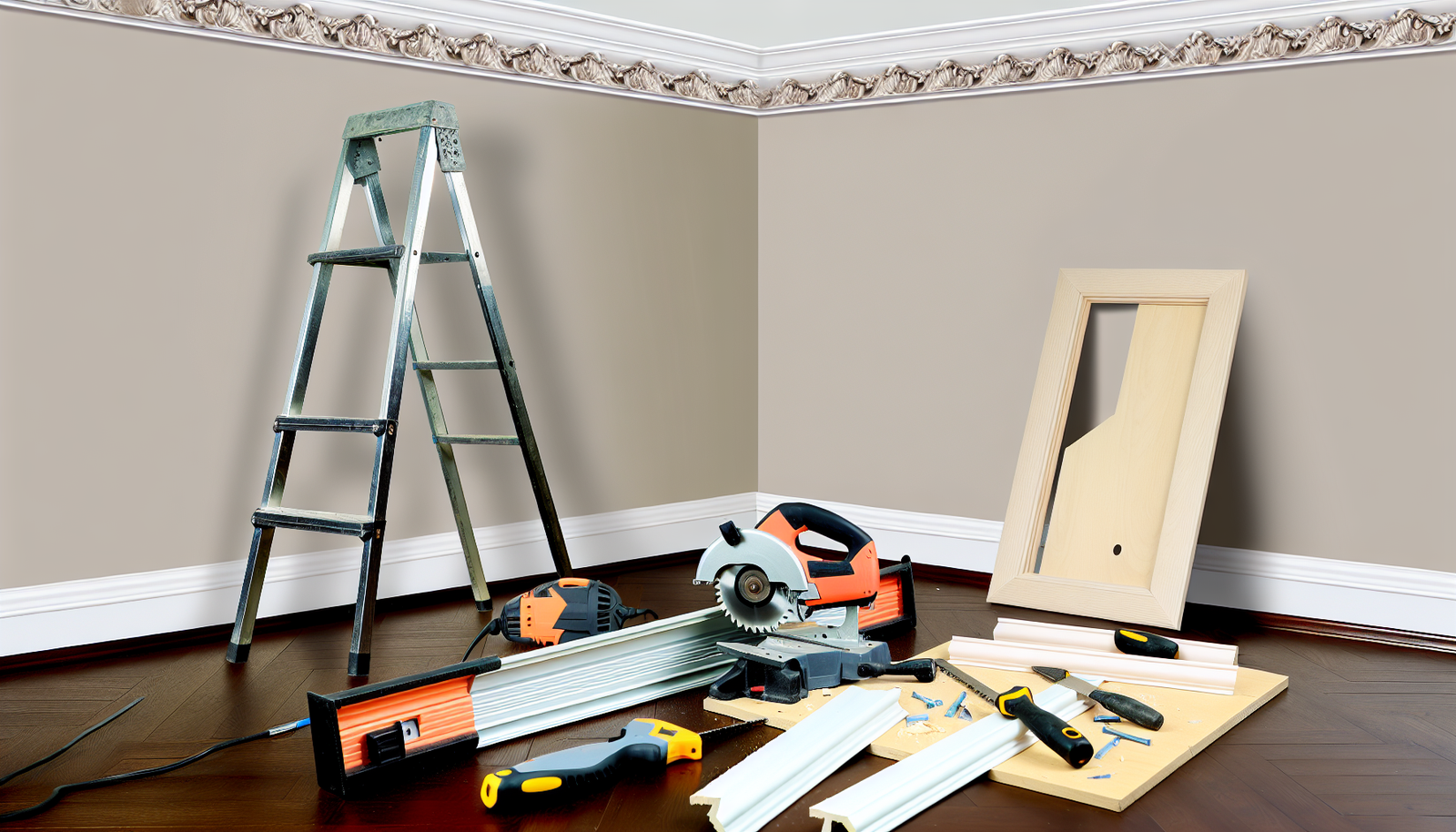
Mastering DIY Crown Molding Installation
Crown molding is the decorative trim fitted at the junction of wall and ceiling that both conceals the seam and creates a finished architectural edge.
More than mere ornament, it serves as a proportional device that visually caps a room, defines horizontal planes, and mediates scale between tall walls and low ceilings.
Depending on profile and scale, a crown molding can subtly refine a space or become a dominant design element that draws the eye upward.
Its roots reach back to classical architecture.
The cornice of a Greek or Roman entablature is the ancestor of modern crown, intended to throw rainwater clear of building faces and to complete a columned elevation.
During the Renaissance and Baroque periods, cornices and interior moldings became richly ornamental, evolving into the layered, carved profiles of 17th–19th century European and Victorian interiors.
In domestic architecture these traditions translated into plaster and carved-wood moldings that signaled status and craftsmanship.
In more recent centuries, simpler, flatter profiles emerged to match modern tastes.
Materials reflect both tradition and technology.Mastering DIY Crown Molding Installation
Wood ranges from carved hardwoods to engineered MDF and pre-primed profiles, valued for warmth and stainability.
Plaster preserves the historic connection and is used for highly detailed, cast or hand-modeled profiles and seamless runs.
Plastic (PVC/vinyl) is produced by extrusion or molding and offers flexible, moisture-resistant profiles suited for utility areas.
Foam or polyurethane moldings are lightweight pieces that replicate ornate profiles without the weight of plaster.
Careful selection of profile, scale, and finish turns a simple transition into an aesthetic statement.
Crown molding frames ceilings, creates shadow and depth, hides imperfections, ties together doors and baseboards, and can visually raise or lower perceived ceiling height.
Thoughtful proportion and profile selection make crown molding a powerful tool in interior design.
Choosing the Right Materials
Choosing materials by project type
Consider function first.
For high-traffic living spaces, hardwoods or primed MDF are reliable.
For moisture-prone rooms, choose PVC or cellular PVC.
For historically accurate restoration, plaster or polyurethane millwork provides authentic profiles without excessive weight.
Material pros, cons and ballpark costs
Plaster: Very authentic and intricate; heavy and requires skilled installation.
Hardwood: Sturdy and stainable; higher cost and precise cutting required.
MDF: Smooth and inexpensive; swells with moisture.
Polyurethane/foam: Lightweight and detailed; lower perceived value.
PVC: Waterproof and durable; limited profile options.Mastering DIY Crown Molding Installation
Where to buy
Local lumberyards and millwork shops offer hardwood and custom profiles.
Big-box retailers supply MDF, PVC, and polyurethane.
Online manufacturers and salvage stores are ideal for ornate or historic pieces.
Matching profile to room style and scale
For low ceilings, select modest profiles.
For taller rooms, deeper entablatures work best.
Coordinate crown with baseboards and trim, and always test a short sample before committing.
Tools You Will Need
Compound miter saw — Essential for precise compound cuts.
Coping saw — Necessary for tight inside corners.
Measuring tools — Tape measure, square, bevel finder, pencil.
Levels and layout — 4′ level, torpedo level, or laser level.
Fastening and finishing tools — Nailers, adhesive, caulking gun, sandpaper.
Support and safety — Sawhorses, ladder, eye and hearing protection, respirator.Mastering DIY Crown Molding Installation
Measuring and Cutting Crown Molding
Accurate measuring and cutting determine whether seams disappear or stand out.
Measure each run along the wall/ceiling contact line, not the face of the molding.
Mark long points clearly and always cut toward waste.
To calculate corner angles, measure the corner and divide by two.
Because crown sits at a spring angle, compound miter and bevel settings must be calculated or referenced from manufacturer charts.
Step-by-step cutting process
Lay molding on the saw in installation orientation.
Make test cuts on scrap.
Test-fit before cutting final pieces.
Coped inside corners produce the tightest results.
Common mistakes to avoid
Cutting the wrong side
Measuring along the wrong plane
Skipping test cuts
Forcing copes instead of trimming gradually
Installing Crown Molding
After dry-fitting, apply adhesive and secure with finish nails.
Nail into studs every 12–16 inches and countersink nail heads.
Use appropriate nail lengths for wood or MDF.
Fill gaps and seams with paintable caulk.
Use wood filler for nail holes and sand smooth once cured.
Finish with proper priming and paint or stain.
Apply thin coats and allow adequate drying time for best results.
Troubleshooting tips
Shim uneven walls
Add adhesive on long runs
Pre-drill near ends
Condition wood before staining
Move slowly and check alignment often — precision and patience define professional results.
Conclusions
In conclusion, installing crown molding is a feasible DIY project that brings elegance and character to your home.
By selecting the right materials and taking care with measuring, cutting, and installation, you can achieve professional-looking results.
Embrace this rewarding project and enrich your living space with beautifully installed crown molding.