

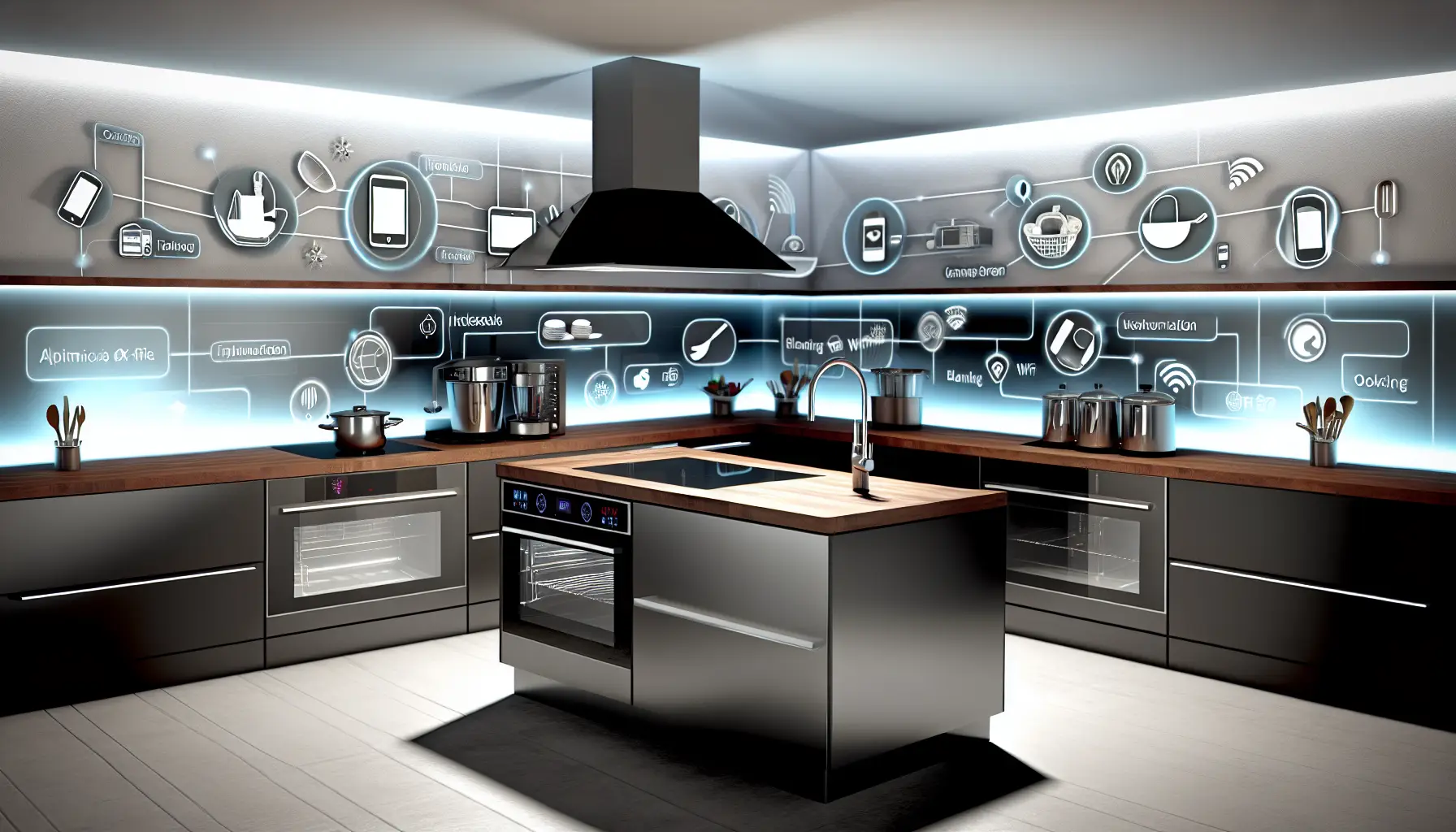
In today’s fast-paced world, smart kitchen gadgets are revolutionizing how we prepare and enjoy food. From smart ovens that can be controlled remotely to advanced blenders that can create nutritional smoothies with a single touch, these innovative tools are designed to enhance functionality and efficiency in the kitchen. Let’s explore the myriad of gadgets that redefine modern cooking.Transform Your Cooking with Kitchen Gadgets
Transform Your Cooking with Kitchen Gadgets
Smart kitchen gadgets are appliances and tools that combine traditional culinary functions with networked sensors, onboard processing and software to deliver adaptable, data-driven cooking experiences. At their core these devices pair physical hardware (heaters, pumps, valves, sensors) with firmware, cloud services and companion apps so tasks that once required manual adjustments become programmable,
Their role in modern cooking extends beyond a single device: smart gadgets act as nodes within a home automation ecosystem. They communicate via Wi‑Fi, Bluetooth, Zigbee or Thread, respond to voice assistants (Alexa, Google Assistant, Siri/HomeKit) and integrate with automation platforms (IFTTT, SmartThings). That connectivity enables coordinated actions — for example a range that can preheat when a smart recipe starts, or a fridge that notifies other devices about ingredient availability. machine‑learning improvements over time.
Examples illustrate the range and unique features:
These devices emphasize interoperability, software-driven functionality and sensor-led control — transforming static appliances into adaptable, networked components of a modern kitchen.
Key Benefits of Smart Kitchen Gadgets
Smart kitchen gadgets amplify more than convenience — they change how efficiently, safely and healthfully you cook. Below are the core advantages and how they work in practice.Transform Your Cooking with Kitchen Gadgets

Beyond convenience, these benefits compound: saved time and energy, safer kitchens, and smarter nutrition create a materially better everyday cooking experience.Transform Your Cooking with Kitchen Gadgets
Popular Smart Kitchen Gadgets
Smart refrigerators often pack internal cameras, barcode and UPC scanning, and compartment-level climate control. Their apps let you tag items, track expiration windows, and auto-generate shopping lists or link directly to grocery services. Advanced models use dual compressors and independently controlled zones for meats,
Smart ovens and ranges combine precise temperature control with multi-stage programs and integrated probe support. Mobile apps provide remote preheat, stage sequencing (sear → roast → rest), and “scan-to-cook” where a barcode or recipe QR sets exact times and temperatures. Convection, steam and air-fry modes are orchestrated by sensor feedback (multi-point thermistors) for consistent results. Many ovens expose APIs or integrate with voice assistants to trigger timing, adjust racks, or run cleaning cycles on demand, and they log cook histories so you can repeat perfect outcomes.
Connected coffee makers range from simple Wi‑Fi brewers to bean‑to‑cup machines with grinders, PID temperature control, and automated milk texturing. Apps let each household member save taste profiles (bean type, grind, dose, brew temp, milk texture), schedule brews, and monitor reservoir and descaling status. Integration with subscription services can automate bean and filter replenishment based on usage patterns.Transform Your Cooking with Kitchen Gadgets
Smart blenders and food processors use variable-speed motors, torque sensors and pre-programmed blend profiles for smoothies, soups and nut butters. App connectivity unlocks guided programs, auto-blend sequences that adapt to resistance, and weighing integration (built-in scales or paired smart scales) to execute recipes by weight. Self‑clean cycles and diagnostic reporting simplify upkeep.
Inter-device automations tie these gadgets together—triggering the oven when the fridge recognizes defrosted meat, or starting a blender program after the coffee grinder signals beans are ready—while apps centralize profiles, firmware updates and device sharing across users.
Integrating Smart Gadgets into Your Kitchen
Assess space, workflow and real needs first. Map counter space, outlet placement and typical meal patterns before buying. In small kitchens prioritize compact, multifunctional smart units and hardwired under‑cabinet or recessed options; in larger kitchens consider built‑in appliances or multiple specialty gadgets to create work zones (prep, cook, beverage). Account for clearance, ventilation and moisture exposure—place electronics away from stove splash zones and high humidity areas.
Match gadget capabilities to cooking habits. If you bake frequently, prioritize devices with precise temperature control and consistent connectivity for logging; if you batch‑cook, choose higher‑capacity, scheduleable units. Favor products that expose APIs or standard integrations if you plan complex automations or custom dashboards.Transform Your Cooking with Kitchen Gadgets
Plan network and power before onboarding devices. Most smart devices rely on 2.4 GHz Wi‑Fi, Zigbee or Bluetooth; check compatibility with your existing hub or router. Use a wired backhaul or mesh Wi‑Fi for dense kitchens. Protect appliances with quality surge protectors and ensure heavy loads (ovens, ranges) are on proper circuits—consult an electrician for dedicated lines or smart breakers.
Connect and organize systematically:
- Inventory devices, group by room and function in your automation app, and use consistent naming conventions.
- Create scenes/routines (e.g., “Cooking Mode”: hood on, smart lights bright, vent fan engaged) and test triggers with both scheduled and voice commands.
- Prefer local-control options or hybrid cloud/local modes to reduce latency and maintain functionality during internet outages.Transform Your Cooking with Kitchen Gadgets
Security and maintenance. Put kitchen gadgets on a segmented or guest SSID, change default passwords, enable firmware auto‑updates and two‑factor where available. Regularly clean sensors and replace consumables; schedule a quarterly check to validate automations and device health.
Choosing wisely and installing with an eye to networks, power and privacy ensures smart gadgets enhance rather than complicate your kitchen.
The Future of Smart Kitchen Technology
AI will move from being an assistant to an active culinary collaborator, using deep learning models trained on taste preferences, nutritional needs and regional cuisines to propose, adapt and even invent recipes in real time. These systems will synthesize sensor input (weight, temperature, moisture, volatile compounds)
Advanced food monitoring will evolve into molecular and microbiological awareness. Compact spectrometers and biosensors embedded in jars, utensils and storage units will detect spoilage markers, allergen traces and nutrient degradation, flagging food safety risks before consumption. Continuous freshness scoring and provenance validation—using blockchain-style ledgers—could verify ingredient origin and quality, shifting shopping toward traceable, high-integrity supplies.
Robotics and automation will expand beyond precise tasks to holistic meal production. Modular countertop robots will perform mise en place, intricate cutting patterns and plating; conveyor-style systems could assemble multi-course meals in home settings. 3D food printing will mature to reproduce textures and nutrient profiles for custom diets, while lab-grown and alternative proteins will be seamlessly integrated by appliances calibrated for their unique properties.
User interfaces will become context-aware and multimodal. Augmented reality overlays will provide step-by-step guidance matched to the user’s skill level; voice, gesture and biometric signals will fine-tune assistance. Systems will negotiate trade-offs—time vs. flavor vs. nutrition—based on learned household priorities.
These advances will reshape culinary habits: more experimentation with complex techniques, higher reliance on automation for routine cooking, and a stronger emphasis on personalized nutrition. Simultaneously, challenges around data privacy, equity of access and preservation of culinary craftsmanship will demand new norms and standards as technology redefines what it means to cook.Transform Your Cooking with Kitchen Gadgets
Conclusions
As technology continues to advance, smart kitchen gadgets become increasingly integral to our culinary experiences. These innovative tools not only save time and effort but also help us embrace a healthier lifestyle. Investing in these gadgets can transform your kitchen into a hub of convenience and creativity, ultimately elevating your cooking game.Transform Your Cooking with Kitchen Gadgets