

Kitchen cable organizer solutions are transforming how we manage cluttered cords on kitchen counters, but not all organizers work as promised. Many users face real frustrations—from weak adhesives to size mismatches and inconvenient installations. If you’ve struggled to bring order to your kitchen cables, this guide is designed to give you honest advice, practical steps, and essential safety tips based on true user feedback and current best practices.
Key Takeaways
- Most kitchen cable organizers are helpful, but common complaints include poor adhesive, limited cable size compatibility, and tricky setups.
- Innovative options like Velcro ties and adjustable holders work better for most kitchens—especially with evolving appliance designs.
- There are no formal safety certifications for kitchen cable organizers; knowing real-world pitfalls is crucial for safe and effective cable management.
- The Core Concept: Why Kitchen Cable Organizers Matter
- Step-by-Step Guide to Organizing Kitchen Cables
- Advanced Analysis & Common Pitfalls
- Conclusion
- FAQ Section
The Core Concept: Why Kitchen Cable Organizers Matter
Kitchens are more crowded with appliances than ever, from blenders to air fryers to smart scales. With every new gadget comes another cable: tangled, dangling, and cluttering workspace. The purpose of a kitchen cable organizer is simple—to give every appliance cord a tidy, safe home.

The right cable organizer can make your kitchen safer by reducing trip hazards and keeping cords away from water and heat sources. It also frees up counter space, making room for essentials like your vegetable chopper or electric food chopper. But not every solution fits every kitchen—or every cord. Most designs fall into these categories:
- Clip organizers: Attach directly to appliances or surfaces. Quick to install but often criticized for weak adhesive.
- Velcro ties: Highly flexible and reusable, perfect for thick or odd-shaped cords.
- Cable management boxes: Ideal for power strips and multi-cord hubs—less so for appliance-specific cords.
- openable holders and adjustable clips: Adapt to many cable types but sometimes bulky.
Before choosing a product, think about where you’ll place it, which appliances you’ll use it with, and whether you may need to move it. Choosing wisely now can prevent clutter, frustration, and potentially unsafe situations down the road.
Step-by-Step Guide to Organizing Kitchen Cables
Effective kitchen cable management requires more than just sticking on a new clip. Here’s a concise, practical approach:
- Gather all appliance cables:
Unplug and lay out the cables of all countertop appliances. Group by size and frequency of use. - Assess cable length and thickness:
Some appliances have large power bricks that won’t fit standard clips. Flexible solutions like space-saving kitchen gadgets can help, but beware of sizing issues. - Choose the right organizer:
– Small cords: Adhesive clips or hooks
– Bulky or heavy cords: Velcro ties, openable holders, or Cable management boxes - Test adhesion before applying permanently:
Clean the area where you’ll attach any adhesive product. Temporarily test with a little weight. Remember, poor adhesion is one of the top complaints. (See real-world fail examples) - Arrange cables for easy unplugging and cleaning:
Organize so you can still move appliances for cleaning. Avoid coiling tightly against heat-producing devices. - Review monthly:
Strong adhesion fades with time and heat, especially in kitchens. Always check for loosened organizers and adjust as needed.
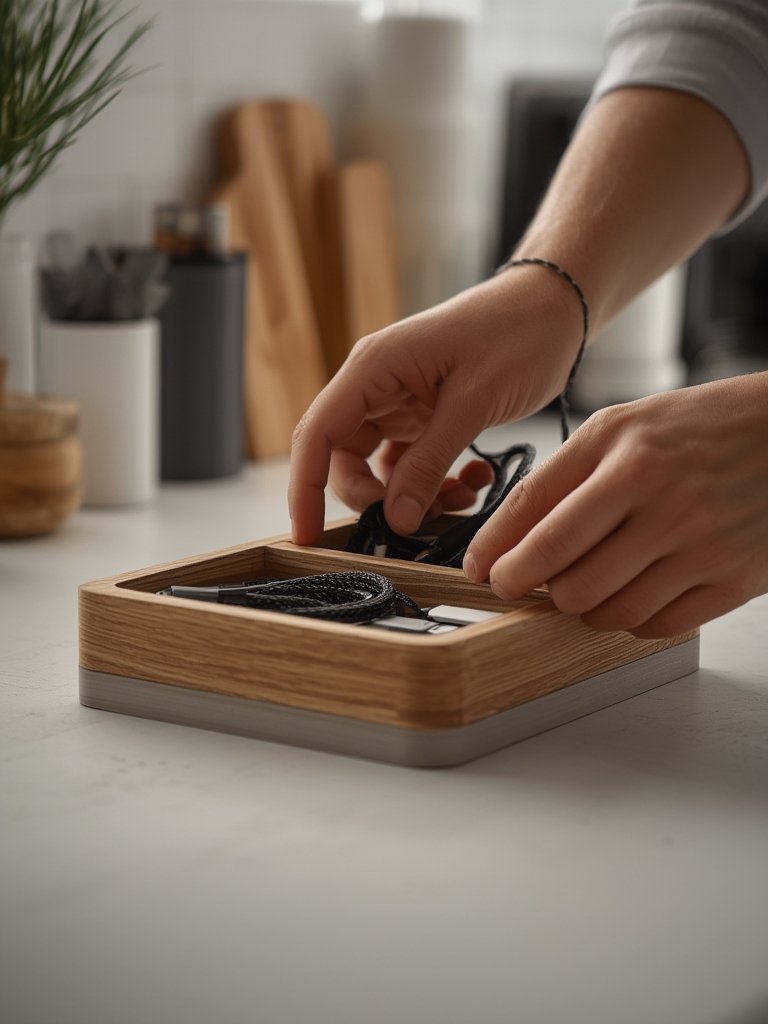
For users in smaller homes or apartments, organizing with adaptable holders or stackable solutions like under sink organizers or cabinet shelf risers is often more flexible and less damaging than drilling or permanent adhesives.
If you rely on appliances daily, keep their cords loosely looped for rapid access but out of sight. For less-used gadgets, store cables in clearly labeled reusable bags—try adapting ideas from vacuum storage bags for compact, damp-proof storage.
Advanced Analysis & Common Pitfalls
While it’s tempting to grab the first kitchen cable organizer you see, experienced users and honest reviews reveal several recurring issues. Here are the most critical problems—and what to do about them:
| Problem | Why It Happens | Workarounds |
|---|---|---|
| Adhesive failure | Heat, weight, or not prepping surface; clips peel off over time | Clean thoroughly before applying. Use Velcro or magnetic clips for heavy cords. See YouTube demonstration |
| Size incompatibility | Standard clips too small for thick or brick-type cords | Opt for adjustable or openable holders, or bundle with Velcro ties |
| Permanent damage | Adhesives or zip ties may leave residue or marks | Choose removable adhesives or reusable ties, especially if you rent |
| Heat safety risks | Organizers placed near ovens or heating appliances can weaken or become unsafe | Keep organizers away from stove/oven; no certified products exist yet (see real examples) |
| Lack of durability data | No official long-term product testing—users must monitor self | Inspect regularly; replace worn organizers as needed |
Real-world user experiences frequently echo these themes. Some reviewers found that even cable organizers positively mentioned by Walmart shoppers lost effectiveness after a few months—especially when overloaded. No kitchen cable organizers are UL or NSF certified, so product selection still relies on observation and ongoing maintenance rather than regulatory guidance (source).
If you have large countertop appliances (like air fryers or stand mixers), look for organizers designed for wide or heavy-duty cords—general-purpose clips usually disappoint. For more organization strategies, see our pantry organization system guide.

Conclusion
A kitchen cable organizer can make a genuine difference in a cluttered space, but only if you match the right product to your specific appliances and habits. Always test before long-term use, avoid risky placements near heat, and choose flexible or removable options for easier adjustment. Ready to bring order to your counter? Start with your most cluttered spot and select an organizer that truly fits your needs. Organize smarter today—your kitchen (and your patience) will thank you for using the best kitchen cable organizer for your unique space.
For more space-saving tips, check out essential kitchen gadgets for apartment living and our roundup of the best kitchen gadgets on Amazon.
FAQ Section
Do kitchen cable organizers work on all surfaces?
Most adhesive-based organizers work best on clean, smooth surfaces like tile, metal, or plastic. Textured or porous surfaces may reduce grip, especially under heavy cable loads.
What’s the best way to manage cords for large kitchen appliances?
Use adjustable or heavy-duty cord holders, or bundle cables with reusable Velcro ties. Avoid permanent adhesives that may damage appliance surfaces. For bulky gadgets, consider storing the cable separately in a labeled bag or drawer, similar to pantry organization.
Is it safe to put cable organizers near stoves or heat sources?
No. Adhesives and plastics may weaken or degrade near heat, increasing fire risk or causing failures. Always keep cable organizers at a safe distance from ovens, toasters, and stoves.
How often should I check or replace my cable organizers?
Check monthly for adhesive fatigue, slipping, or plastic wear—especially if organizers are near heat or humidity. Replace any worn or peeling products immediately to avoid cord hazards.
How can I avoid damaging my countertop or appliances?
Choose removable adhesives or use Velcro ties and freestanding boxes. Avoid zip ties or permanent glues, especially on high-end finishes or if you live in a rental.