

Learn how to improve indoor air quality for a healthier home with practical tips on ventilation, filtration, and source control to protect your health.How to Improve Indoor Air Quality for a Home1
How to Improve Indoor Air Quality for a Home1
Indoor air quality (IAQ) refers to the chemical, physical and biological characteristics of the air inside buildings as they relate to the health and comfort of occupants. Good IAQ means air that supports breathing without adverse short- or long-term effects. It is central to physical health, cognitive performance, sleep quality and general wellbeing — poor IAQ can raise disease burden and reduce productivity across households and workplaces.
Common indoor pollutants can be grouped by type rather than specific sources:
– Volatile organic compounds (VOCs), a diverse class of reactive gases, can cause irritation, central nervous system symptoms and long-term organ damage depending on dose and compound.
– Particulate matter (PM), especially fine particles (PM2.5), penetrate deep into the lungs and bloodstream, triggering inflammation and elevating risks for respiratory and cardiovascular disease.
– Biologicals such as mold spores, bacteria, dust-mite allergens and viral particles provoke allergic reactions, asthma exacerbations and infections.
– Gaseous contaminants (e.g., radon, carbon monoxide) have distinct acute and chronic toxicities and often require targeted monitoring.
Indoor pollutants affect health through multiple mechanisms: direct irritation of mucous membranes, immune sensitization and allergic inflammation, oxidative stress and systemic inflammation from particles, and chronic toxicity or carcinogenesis from some gaseous compounds. Effects range from transient symptoms — eye, nose or throat irritation, headaches, fatigue and poor concentration — to persistent conditions like new-onset asthma, chronic bronchitis, cardiovascular events and certain cancers.How to Improve Indoor Air Quality for a Healthier Home1How to Improve Indoor Air Quality for a Home1
Sick building syndrome describes nonspecific, reversible symptoms among occupants linked to time spent in a building without a clear, diagnosable illness; by contrast, building-related illness denotes an identifiable disease with a plausible connection to indoor exposures. Vulnerable groups — young children, the elderly, pregnant people and those with preexisting lung or heart disease — experience disproportionate harm. Because exposures are often chronic and cumulative, improving IAQ is essential to prevent both immediate discomfort and long-term disease.
Identifying Common Indoor Pollutants
Many harmful indoor pollutants originate from identifiable activities and materials rather than mysterious “indoor air” itself. Secondhand smoke (sidestream and exhaled mainstream smoke) is a concentrated mix of volatile organics, polycyclic aromatic hydrocarbons and fine and ultrafine particles. It is emitted directly into indoor spaces during smoking, clings to fabrics and surfaces (thirdhand smoke), and re-enters the air through resuspension or heating. Acute and chronic effects include eye and airway irritation, increased childhood asthma incidence and exacerbations, higher risk of sudden infant death syndrome, and elevated long‑term cardiovascular and lung cancer risk for exposed adults.How to Improve Indoor Air Quality for a Healthier Home1
Combustion byproducts from gas stoves, fireplaces, wood‑burning heaters and malfunctioning furnaces produce carbon monoxide (CO), nitrogen dioxide (NO2), ultrafine particles and combustion‑generated organic compounds. These form indoors during incomplete combustion or when exhaust pathways are blocked; leaks and backdrafting can move pollutants from appliance zones into living areas. Health impacts range from CO‑related hypoxia and acute poisoning to NO2‑induced airway inflammation and particle‑driven cardiovascular stress.

Chemical off‑gassing (emissions from building materials and consumer goods) releases formaldehyde from pressed woods and some insulation, solvent‑borne and waterborne VOCs from paints and finishes, phthalates from vinyl flooring and plasticized products, and legacy flame retardants from upholstered furniture. Off‑gassing occurs by volatilization and desorption, accelerated by heat and humidity, and can persist for months to years. Effects include mucous membrane irritation, sensitization, endocrine disruption, neurodevelopmental impacts in children, and certain carcinogenic risks.How to Improve Indoor Air Quality for a Home1
Groups at higher risk include infants and young children (higher intake per bodyweight and developing systems), pregnant people and fetuses (sensitive developmental windows), the elderly and those with cardiovascular or respiratory disease, immunocompromised individuals, occupants of poorly maintained or tightly sealed low‑income housing, and workers with occupational exposures (e.g., cleaners, painters).
The Role of Ventilation in Air Quality
Ventilation is the primary mechanism by which indoor air is regularly exchanged with outdoor air, reducing concentrations of indoor-generated contaminants and regulating moisture, odor and CO2. In tightly sealed modern buildings, intentional ventilation is essential because infiltration alone no longer provides predictable fresh-air delivery. Ventilation works by diluting indoor emissions (the same sources covered earlier) and transporting them out of occupied spaces; its effectiveness depends on rate, distribution, and where air is brought in and exhausted.How to Improve Indoor Air Quality for a Healthier Home1
- Natural ventilation — uses wind and the stack effect (warm air rising) through operable windows, vents and trickle openings. It can be highly effective when outdoor conditions and building layout allow cross-ventilation, but it is intermittent, weather-dependent, and harder to control for consistent air exchange.
- Mechanical ventilation — uses fans to provide exhaust-only, supply-only, or balanced systems. Exhaust-only draws air out (can depressurize the house); supply-only forces outdoor air in (can pressurize and introduce outdoor contaminants); balanced systems actively control both supply and exhaust to maintain neutral pressure and predictable ventilation rates.
- Hybrid systems — combine natural and mechanical strategies, letting passive airflow work when conditions are favorable and using fans or heat/energy recovery units when needed.How to Improve Indoor Air Quality for a Healthier Home1
Balanced mechanical approaches like Heat Recovery Ventilators (HRVs) or Energy Recovery Ventilators (ERVs) recover thermal energy while exchanging air, improving energy efficiency and enabling continuous ventilation without large heating/cooling penalties. Demand-controlled ventilation uses sensors (CO2, occupancy, sometimes PM) to vary airflow to actual needs, improving both air quality and energy use.
Practical considerations: locate intakes away from roads, exhausts or pollutant sources; avoid short‑circuiting supply to exhaust so air flows through occupied zones; maintain adequate ventilation during high-emission activities with local exhaust (kitchen/bath boosts); and when outdoor air is poor, rely on mechanical systems with appropriate intake placement and filtration while temporarily reducing natural ventilation. Aim for steady, distributed fresh-air delivery (targeting CO2 < ~800–1,000 ppm or guidelines like ~0.35 ACH) rather than sporadic window opening for predictable, healthier indoor environments. Filtration Systems and Air Purifiers How to Improve Indoor Air Quality for a Healthier Home1
Filtration systems and air purifiers vary widely in technology and target pollutants, and choosing the right one requires matching device capability to the contaminants you want to remove. Mechanical filters use fibrous media to trap particles. True HEPA (High Efficiency Particulate Air) filters capture particles via a combination of interception, inertial impaction, and diffusion: larger particles hit fibers and stick, mid-sized particles are intercepted, and the smallest (<0.1 μm) are removed by Brownian motion causing them to collide with fibers. Certified HEPA removes at least 99.97% of particles 0.3 microns in diameter, making it effective against dust, pollen, pet dander, smoke and many mold spores. Look for “True HEPA” rather than “HEPA-type” claims.
Activated carbon filters adsorb gases and volatile organic compounds (VOCs) and are the complement to HEPA for odors, chemical off-gassing, and some combustion byproducts. Electronic options—electrostatic precipitators and ionizers—charge particles to attract them to plates or surfaces; they can be effective for fine particles but some models produce ozone, which is harmful and should be avoided. UV germicidal irradiation (UVGI) and photocatalytic oxidation can inactivate microbes but require adequate airflow dwell time and often work best integrated into HVAC or combined units rather than stand-alone purifiers.

Best practices:
– Size devices by CADR (Clean Air Delivery Rate) for the room; oversized or undersized units How to Improve Indoor Air Quality for a Home1underperform.
– Use true HEPA + activated carbon combination for broad protection.
– Replace filters per manufacturer intervals; pre-filters extend HEPA life and should be cleaned regularly.
– Ensure proper sealing and correct installation to prevent bypass.
– For whole-house in-duct HEPA, confirm HVAC fan capacity can handle added pressure drop.
– Avoid ozone-generating devices; check certifications (AHAM, CARB).
– When changing filters, wear a mask/gloves and dispose sealed to limit re-suspension of captured pollutants.
Regular monitoring of performance, noise, and airflow keeps filtration systems operating near their design capacity.How to Improve Indoor Air Quality for a Home1
Practical Steps for Improving Indoor Air Quality
Keeping indoor air healthy requires a blend of daily habits, material choices, moisture control and proactive HVAC care. Start with disciplined cleaning routines that remove settled dust and sources of allergens before they become airborne: use a vacuum with a sealed system and quality filter, damp-dust surfaces with microfiber cloths, launder bedding weekly in hot water (if tolerated), and steam-clean or shampoo rugs and upholstery seasonally. Reduce clutter and replace or wash curtains and throw pillows regularly; spot-clean spills promptly to prevent mold growth. Minimize use of aerosol products, scented candles and strong air fresheners — opt for unscented or plant-based cleaning agents like vinegar, baking soda and citrus-based cleaners where appropriate.How to Improve Indoor Air Quality for a Home1
Control humidity deliberately. Aim for 30–50% relative humidity: this range limits dust mite proliferation and inhibits mold without creating overly dry air. Use a hygrometer to monitor levels. Install and run exhaust fans during showers and cooking; vent clothes dryers outdoors; dry indoor laundry in a ventilated area or use a dryer. In humid climates use dehumidifiers in basements and damp rooms; in dry climates consider humidifiers but maintain strict cleaning of reservoirs to prevent microbial growth.
Choose low-emission materials and furnishings. Select paints, sealants, flooring and cabinetry labeled low-VOC or certified by programs like GREENGUARD or CARB-compliant for composite wood. Prefer solid wood over particleboard, natural fiber rugs, and non-toxic adhesives. Always allow new materials to off-gas outdoors or in a well-ventilated space before bringing them into living areas.How to Improve Indoor Air Quality for a Healthier Home1
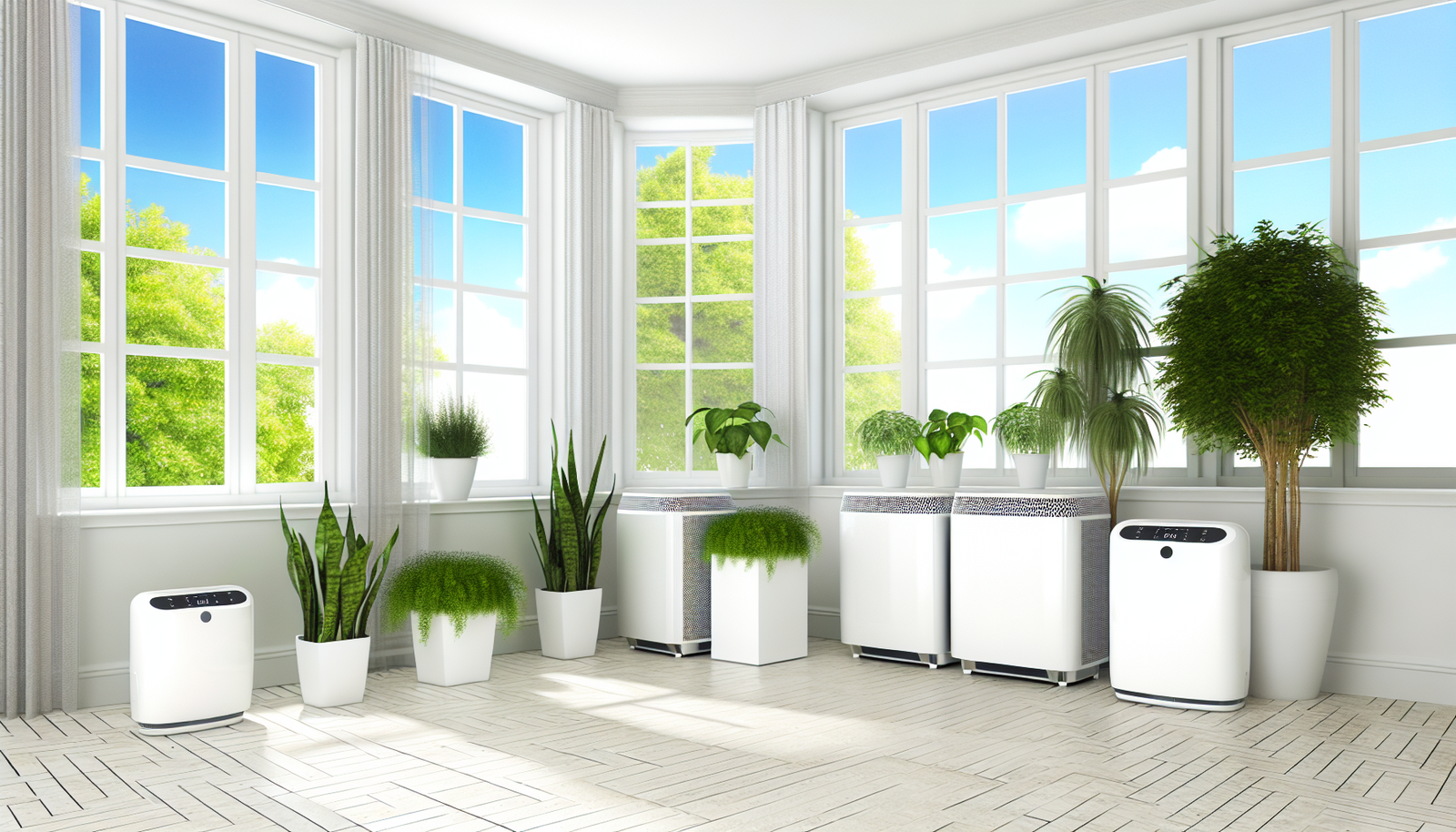
Incorporate plants thoughtfully: species like snake plant, pothos and spider plant add greenery and humidity regulation but are not a substitute for ventilation. Avoid overwatering and ensure good drainage to prevent mold; consider several small plants distributed around the home rather than one large specimen.
Maintain HVAC beyond filter swaps: schedule annual professional inspections to clean coils and drain pans, check and seal ductwork, verify proper refrigerant and airflow balance, and service the heat exchanger. A well-tuned HVAC system reduces pollutant redistribution and supports stable temperature and humidity — a major foundation for healthy indoor air.How to Improve Indoor Air Quality for a Home1
Conclusions
Enhancing indoor air quality is essential for maintaining good health and comfort. By implementing effective strategies such as improving ventilation, using air purifiers, and managing pollutants, you can significantly reduce the risks associated with poor air quality. Taking proactive steps today will lead to a healthier indoor environment for you and your family.How to Improve Indoor Air Quality for a Healthier Home1,How to Improve Indoor Air Quality for a Home1