

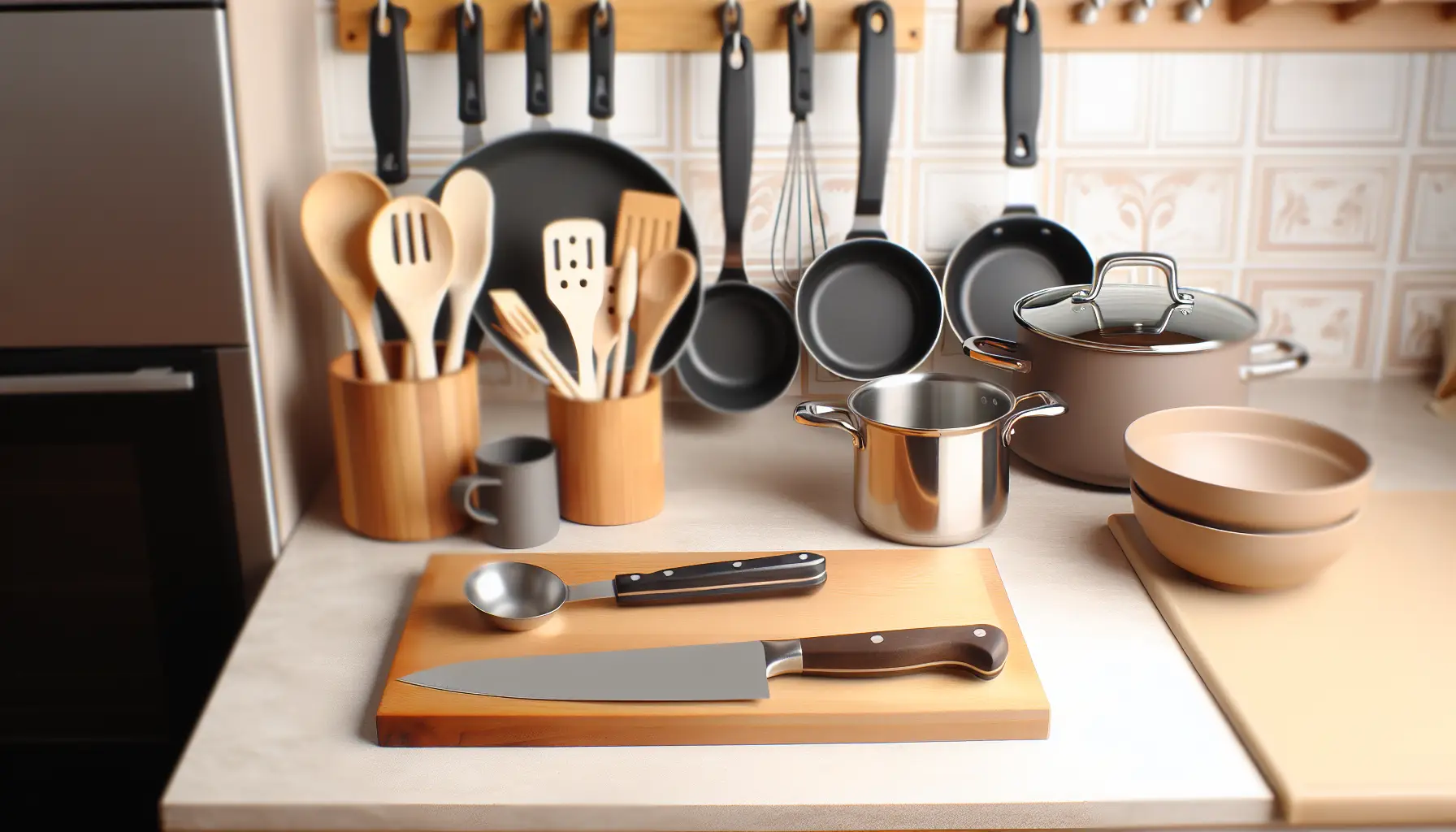
Starting your cooking journey can be overwhelming, especially when it comes to selecting the right kitchen tools. These essential utensils are vital for food preparation, ensuring you have a smooth and enjoyable cooking experience. This article explores various tools suited for beginners, helping you build a functional kitchen without any confusion.Essential Kitchen Tools for advanced
Essential Kitchen Tools for Advanced
Kitchen utensils are the physical implements—handheld or small appliances—designed to perform defined tasks during food preparation. Their role goes far beyond convenience: the right utensil channels technique, reduces effort, and produces consistently better results. For beginners, understanding what utensils do and why they differ is a shortcut to safer, faster learning in the kitchen.
Three broad categories capture most everyday needs:

- Cutting tools: engineered to separate, portion and shape ingredients. Differences in edge shape, thickness and material determine whether a tool slices smoothly, tears crusts, or saws through fibrous vegetables.
- Measuring tools: calibrated to quantify volume, mass, temperature or time. Precision matters in baking and when scaling recipes; mismatched units or imprecise measures lead to inconsistent outcomes.Best Essential Kitchen Tools for advanced
- Cooking tools: implements used to combine, apply heat, flip and finish foods. Surface material, heat tolerance and ergonomics influence how food cooks and how easily you control the process.
Manufacturers design utensils for specific tasks: slender, sharp edges for thin slicing; serrated edges for crisp exteriors; rigid scoops for dense doughs; flexible blades for scraping bowls. Material choices—stainless steel, silicone, wood, plastic—affect durability, reactivity with acidic foods and cleaning requirements. Ergonomic handles, balanced weight and secure grips reduce fatigue and accidents, which is especially important for people new to knife skills and stove work.Best Essential Kitchen Tools for advanced
For a beginner, investing thoughtfully in utensils saves time and frustration. Multipurpose tools accelerate learning, while single-purpose items can offer superior performance for certain techniques. Maintainability matters too: tools that are easy to clean and store are more likely to be used regularly. Ultimately, matching utensil design to the task is how good technique becomes repeatable, safe and enjoyable.
Must-Have Tools for Food Preparation

- Chef’s knife, paring knife, and serrated knife: A single sharp chef’s knife covers most chopping, dicing, and mincing tasks; a paring knife handles delicate work like coring or trimming; a serrated knife slices bread and soft-skinned produce. Sharpness is key for efficiency and safety—dull blades force you to use more pressure and slip. Learn basic grips and honing to maintain the edge.
- Cutting boards (at least two): Use one for produce and another for raw proteins to avoid cross-contamination. Choose materials wisely—plastic or composite for meats (dishwasher-safe) and wood or bamboo for vegetables and bread. Keep boards well-sanded and oiled (wood) or replace when deeply scored to prevent bacterial hiding spots.
- Vegetable peeler (Y or swivel): Faster and safer than a knife for peeling fruits and root vegetables. A sharp, ergonomic peeler reduces wrist strain and preserves edible flesh, minimizing food waste. Use a serrated peeler for soft-skinned items like tomatoes.Best Essential Kitchen Tools for advanced
- Measuring cups, spoons, and a kitchen scale: For consistent results, use dry measuring cups for solids, liquid measuring cups with a spout for liquids, and a kitchen scale for precision baking and portion control. Scales eliminate guesswork and simplify scaling recipes.
- Mixing bowls and strainers/colander: Nested bowls in varying sizes speed prep—marinating, mixing, and mise en place. A fine-mesh sieve and a sturdy colander are essential for rinsing grains, draining pasta, and sifting dry ingredients.
- Whisk, wooden spoon, and tongs: A whisk emulsifies dressings and aerates batters; wooden spoons are gentle on bowls and don’t conduct heat; tongs provide safe handling of hot food without piercing it. Choose heat-resistant, comfortable-handled tools.
- Kitchen shears and thermometer: Shears cut herbs, trim poultry, and open packages safely. An instant-read thermometer ensures food is cooked to safe temperatures, preventing undercooking risks.
Cooking Equipment Essentials
Choosing the right cookware and basic cooking utensils determines how quickly a beginner moves from frustration to confidence. Focus first on function: a versatile core set covers sautéing, simmering, roasting and baking. Aim for one 10–12″ skillet (for frying and searing), a 2–3 qt saucepan (sauces, grains), a 6–8 qt stockpot or Dutch oven (soups, pasta, braises), and a rimmed half-sheet baking sheet. Add an oven-safe roasting pan or a covered Dutch oven for oven-to-stove recipes.
Materials matter. Stainless steel is durable, non-reactive and great for high-heat sears and deglazing; choose clad or bonded cookware (aluminum or copper core) for even heat distribution. Cast iron excels at heat retention—perfect for searing and oven braises—but is heavy and needs seasoning (or buy enameled cast iron to avoid seasoning and reactivity with acids). Nonstick cookware is indispensable for eggs and low-fat cooking; it simplifies cleanup but avoids using it at very high heat and with metal utensils. Copper offers the fastest temperature changes and superb control but is costly and typically lined with stainless to prevent reactions. Hard-anodized aluminum is a robust middle ground: excellent conductivity with good durability.Best Essential Kitchen Tools for advanced
For baking sheets, prefer aluminized or heavy-gauge steel half-sheets with a rim—they resist warping and promote even browning. Avoid overcrowding pans; use smaller sheets for single trays, larger ones for roasting vegetables and proteins.Best Essential Kitchen Tools for advanced
Utensils: choose a heat-resistant silicone spatula for mixing and scraping, a thin metal turner for flipping in stainless skillets, a wooden spoon for stirring acidic simmering dishes, and a ladle and solid/slotted spoons for serving. Prioritize utensil materials compatible with your cookware (no metal on nonstick). Also check oven-safe ratings and induction compatibility so pieces can move from stovetop to oven when recipes demand.
Start with the versatile set above and add specialty pieces as your cooking style becomes clearer—searing, braising, baking or sautéing will each steer your next purchases.
Helpful Gadgets and Accessories
Small gadgets and accessories often make the biggest difference for beginners, turning fiddly or time-consuming tasks into smooth, reliable steps. Consider them the helpers that extend the capabilities of your basic cookware and let you focus on technique and flavor rather than awkward prep. Below are practical items worth adding, with notes on types and how they streamline common kitchen jobs.Best Essential Kitchen Tools for advanced
- Whisks — Choose a balloon whisk for aerating eggs and batters and a flat or French whisk for deglazing and stirring sauces. A good whisk improves texture and speed: it incorporates air efficiently and prevents lumps, saving time and reducing frustration when making dressings, custards, or pan sauces.
- Tongs — Spring-action or locking tongs with silicone tips are versatile: turning proteins, serving salad, or grabbing hot items without scratching cookware. The extra reach and grip offer safer handling than spatulas for bulky items and make flipping and plating more controlled.
- Colanders and strainers — A deep colander for pasta and a fine-mesh strainer for rinsing grains or sifting dry ingredients cover different needs. Micro-mesh strainers catch seeds and small solids, essential for silky sauces and stocks, while a sturdy colander accelerates draining and cooling.
- Can opener and jar tools — A smooth, ergonomic can opener and reliable jar opener reduce effort and improve safety. Electric openers can be helpful for those with limited hand strength; a bench scraper often doubles as a convenient can lid lifter and portioning tool.
- Peelers, graters, and microplanes — A swivel peeler speeds prep; a coarse grater handles vegetables and cheese; a microplane provides fine zest and spice grating for bright flavor finishing. These enhance consistency and let beginners layer flavors with minimal technique.
- Kitchen shears and garlic press — Shears are multitaskers for snipping herbs, trimming proteins, and opening packaging. A garlic press saves time and yields uniform mince for even cooking.
Prioritize a few high-quality pieces that fit your cooking style—these small investments deliver immediate returns in speed, safety, and enjoyment.
Caring for Your Kitchen Tools
Keep tools clean, dry, and ready: regular care preserves performance and food safety. For everyday cleaning, rinse utensils immediately after use to prevent food from hardening. Use hot water and a mild detergent; avoid harsh scourers on non-stick and delicate surfaces. While many tools tolerate the dishwasher, **hand-washing preserves coatings and wooden parts**—dishwashers can warp wood, dull finishes, and loosen glued handles. Dry metal and wood thoroughly to prevent rust and mold.
Sanitize surfaces that contact raw protein. For cutting boards and utensils, alternate between soap-and-hot-water washing and periodic sanitizing with a diluted bleach solution (1 tablespoon bleach per gallon of water), or use white vinegar and baking soda for a gentler approach. For deep cleaning, pour boiling water over plastic boards to reduce staining and odors; glass or composite boards can be soaked and steam-cleaned. Replace boards with deep grooves or persistent stains, as they harbor bacteria.
Maintain functional edges and surfaces. Keep knives sharp with regular honing and less-frequent sharpening (every few months, depending on use). Store knives in a block, on a magnetic strip, or with blade guards to protect edges. For cast iron, dry promptly and apply a thin layer of oil to maintain seasoning; avoid soap and never soak. Non-stick pans should never be overheated or scraped—use wooden or silicone tools and low-to-medium heat to extend the coating’s life.
Organize to reduce clutter and damage. Use drawer inserts, utensil caddies, hanging rails, and labeled containers to keep tools accessible and separated. Coil appliance cords, remove and dry removable parts, and descale kettles and coffee makers regularly with vinegar or citric acid. Inspect tools monthly for cracks, rust, or loose fittings—replace anything that compromises hygiene or safety.
A tidy, well-maintained toolset speeds cooking, reduces waste, and improves flavor and safety—good care is an investment that pays back in consistent, enjoyable results.
Conclusions
Equipping your kitchen with the right tools is essential for a successful cooking journey. From basic utensils to helpful gadgets, the tools discussed in this article will make food preparation easier and more enjoyable. By understanding how to care for your kitchen tools, you will ensure their longevity and enhance your culinary skills.Best Essential Kitchen Tools for advanced
—