

Digital kitchen scale guide: If you want to master accurate portion control or calorie tracking at home, a digital kitchen scale can be your most powerful tool. This guide dives into what actually affects a kitchen scale’s accuracy, how to avoid the most common frustrations, and how to choose a scale that will last and perform—without falling for misleading marketing claims.
Key Takeaways
- Consumer digital kitchen scales usually offer 0.1–1 g accuracy for most tasks, but performance at very low or high weights can differ from specs—especially with cheaper units.
- Common problems like drift, poor tare, and display issues can ruin portion control—even on “best-selling” models.
- For long-term reliability, focus on build quality, warranty, and stable readings, not just flashy features.
- What Matters in a Digital Kitchen Scale for Portion Control?
- Step-by-Step Guide: Choosing & Using Your Digital Kitchen Scale
- Advanced Analysis & Common Pitfalls
- Conclusion
- FAQ
What Matters in a Digital Kitchen Scale for Portion Control?
Most digital kitchen scales sold for home use claim fine accuracy, with readings down to 0.1–1 g accuracy increments and maximum loads from 3 kg to 10 kg. However, real-world accuracy depends not only on the sensor specs but also on how the scale handles drifting, tare (zeroing), environmental conditions, and how well it resists mechanical shock and humidity.
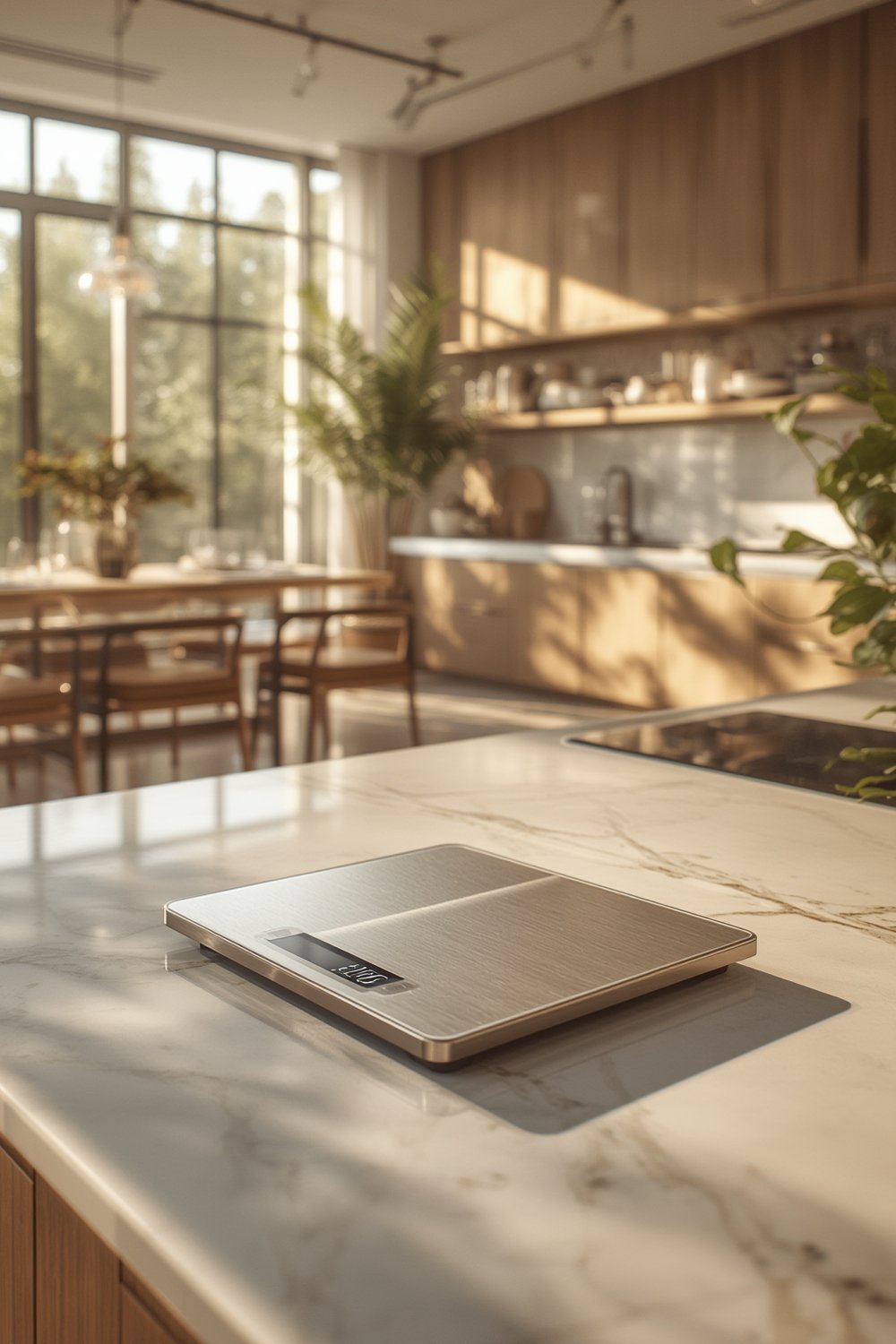
Recent independent testing and manufacturer data confirm that top-rated models (Greater Goods, Escali, OXO, etc.) do deliver 0.1–1 g readability. The catch: accuracy at very low weights (below 3–5 g) or near their max limit may degrade—even if the display still increments in the advertised steps. Such error bands don’t matter for regular meal prep but can skew nutrition tracking with small or calorie-dense ingredients.
Besides measurement chops, a scale’s value for portion control boils down to:
- Stable, repeatable readings
- Reliable tare (resetting to zero)
- Readability and ease of use—especially when prep gets messy
- Build quality and support, so the scale doesn’t lose accuracy after a few months
Even the best kitchen gadgets won’t help if the scale turns off mid-recipe or can’t give you a consistent reading. Internal guides like Essential Kitchen Tools for Beginners and Meal Prep Kitchen Tools echo this advice.
Step-by-Step Guide: Choosing & Using Your Digital Kitchen Scale
- Decide on accuracy needs for your main use case.
- If you’re tracking whole meal portions, a 1 g graduation is sufficient. For espresso, baking micro-ingredients, or precise macro tracking, go for a scale with proven 0.1 g readability—at least up to 300–500 g.
- Pick the right size and capacity.
- A 5 kg max is ideal for most kitchens—large enough for heavy bowls, light enough for responsive measurement. Batch cooks or bulk recipes may opt for 10 kg units.
- Check manufacturer accuracy claims and warranty.
- Look for models specifying accuracy across the range (for example, ±1 g stated for 5–500 g) and a warranty of at least two years.
Scales from reputable brands such as Etekcity, OXO, and MyWeigh stand out in reviews and long-term durability studies.
- Look for models specifying accuracy across the range (for example, ±1 g stated for 5–500 g) and a warranty of at least two years.
- Prioritize build quality and practical design.
- Choose scales with sealed, water-resistant buttons and a tough stainless or glass top. Build issues and poor sealing are leading causes of error and breakdown (source).
- Assess usability: display, controls, power source.
- Opt for large, high-contrast displays you can read even with big bowls in place. Prefer simple button controls over capacitive/touch pads, and AA/AAA battery options (or USB, if tested for battery safety).
- Always use your scale on a hard, level surface away from heat, steam, and vibration.
- This prevents mechanical and electronic interference with your readings—key for accurate portion control.
- Test and recalibrate regularly for reliable tracking.
- Check the scale’s calibration with known weights (like coins or packaged foods) at least every few months, or after knocks/spills. This step is overlooked by most users—but makes a huge difference in long-term tracking accuracy.
- Maintain your scale for long life.
- Avoid water immersion, wipe spills immediately, store indoors in normal humidity, and remove batteries for long periods of disuse.
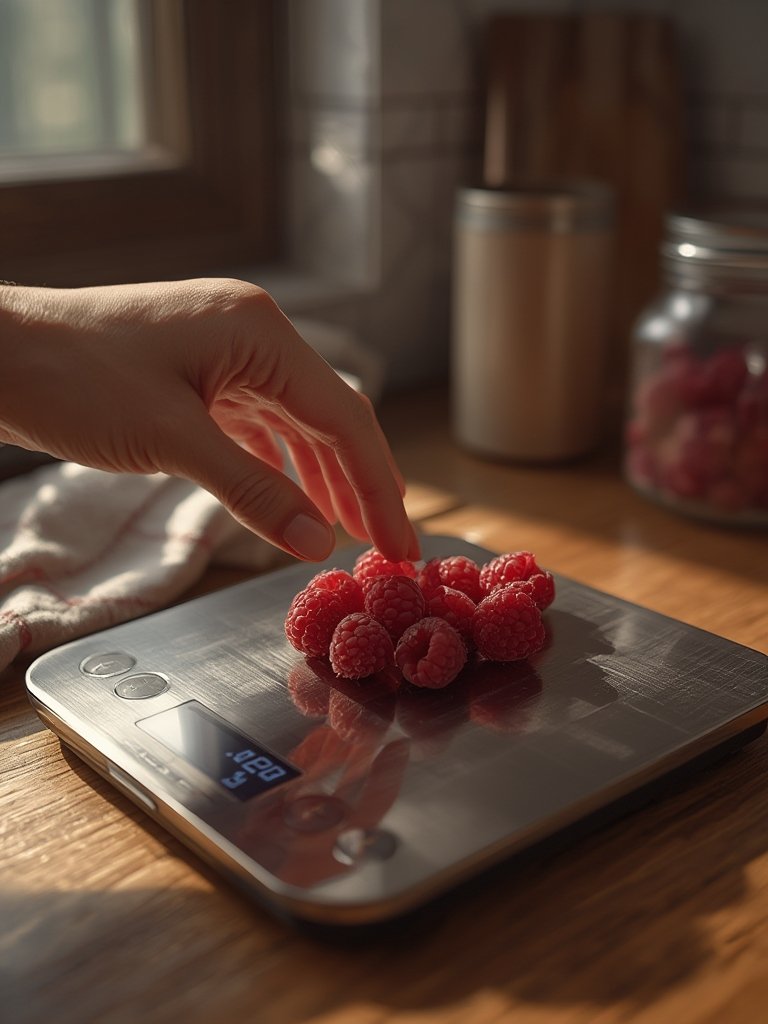
Curious about related kitchen gear for easy prep? See our vegetable chopper guide or discover how smart kitchen scales help automate logging in this guide.
Advanced Analysis & Common Pitfalls
Even “top-rated” digital kitchen scales aren’t flawless. Here’s what real testing, engineering data, and user experience reveal about what can go wrong—and how to avoid it:
Comparing Key Performance Factors
| Spec/Feature | Budget (<$20) | Mid-Range ($25–$40) | High-End ($50+) |
|---|---|---|---|
| Resolution | 1 g | 1 g (some 0.1 g below 500 g) | 0.1 g |
| Low-Weight Accuracy | Unreliable below 3–5 g | Consistent from 2 g upward | Accurate to 1 g or less |
| Drift After Tare | Common (1–3 g) | Rare | Minimal |
| Display & Controls | Small or dim; touchpad prone to error | Large, bright, reliable buttons | Premium displays; app options |
| Durability/Warranty | 3–12 months | 1–5 years | 2+ years; better support |
| Response Time | Sluggish | Fast | Very fast & stable |
Common Pitfalls (and How to Fix or Avoid Them)
- Drifting or unstable readings: Often caused by weak load cells, humidity, or use on soft/uneven surfaces. If readings flicker, move your scale to a hard, stable countertop and let it rest for a minute to stabilize temperature before use.
- Poor tare or failing to zero: Always check display after taring. If it’s not zero, repeat. Regularly recalibrate (see above) and never overload past max weight.
- Bad accuracy at small weights: Even premium models may fail below 1–2 g. Consider higher-end barista or gram scales for doses of spices and supplements, or use a commercial grade scale if exactness is mission-critical.
- Water, steam, and cleaning damage: Most kitchen scales are “water-resistant” at best—very few are waterproof. Never submerge. Quickly dry spills and store away from steam zones, as explained in apartment gadget guides.
- Display or button trouble: Models with small, rimmed screens become unreadable under large plates or in daylight glare. Prefer pull-out or angled displays. Mechanical push-buttons nearly always outperform touch controls if your hands are wet or oily.
What Most Guides Miss
- Environmental impacts: Temperature swings, humidity, and even nearby running appliances can affect accuracy. Advanced guides (see Trending Kitchen Gadgets) cover these edge-cases for a reason.
- Calibration drift: All scales lose some accuracy over time. Only a few brands make it easy to recalibrate at home. If you use your scale daily, check calibration quarterly.

Conclusion
Investing in the right digital kitchen scale isn’t just about getting smaller graduation numbers—it’s about consistent, reliable results tailored to your needs. Focusing on build quality, usability, and regular calibration will keep your digital kitchen scale guide journey low-stress and high-accuracy for years. Ready to take your portion control seriously? Start by applying these principles (and see our complete tools list for more upgrades).
Choose a scale with stable readings, a solid warranty, and practical design—and you’ll stop second-guessing your calories for good.
FAQ
Can I trust cheap digital kitchen scales for portion control?
Cheap scales can be “good enough” for basic meal prep, but often show erratic readings, quick drift, and poor low-weight accuracy. For reliable calorie tracking, invest in a mid-range ($25–$40) model from a reputable brand.
How can I check if my kitchen scale is still accurate?
Test your scale with known weights such as coins or sealed, labeled food packages. Place them in the center and corners of the scale. If you see errors over 1–2 g, recalibrate (if possible) or consider replacing the unit.
Does humidity really affect digital kitchen scale accuracy?
Yes—long-term exposure to high humidity can corrode the internal load cell and electronics, leading to increased drift, noise, and calibration shifts. Keep your scale dry and clean for best accuracy.
Are app-connected “smart” kitchen scales worth it?
Smart models with app integration make logging easier, but add complexity and can have software or battery issues. Focus on scales with proven accuracy and reliable hardware first; consider Bluetooth/app extras as a bonus.
What warranty length should I expect on a good kitchen scale?
Budget models may only offer 3–12 months, but the best mid-range and high-end brands typically include 1–5 year warranties, which better covers possible calibration and build issues over time.