


Countertop compost bin adoption is accelerating as city dwellers and climate conscious cooks search for easy, odor-controlled ways to divert food scraps at home. But beneath the smart gadgets and stainless caddies, real challenges and practical details matter far more than you might think. Here’s how countertop compost bins really stack up in 2024—and what to watch out for.
Key Takeaways
- Countertop compost bins are growing rapidly in popularity, especially in urban households, but still represent a minority of homes.
- Choosing the right bin involves not just material and odor control, but understanding ongoing costs, municipal rules, and real-world limitations.
- Despite marketing claims, many bins have pitfalls—noise, lifespan, filter expenses, and questionable compatibility with all food waste.
- What Is a Countertop Compost Bin and Why Use One?
- How to Use a Countertop Compost Bin: Step-by-Step
- Advanced Analysis: Pitfalls and Real-World Issues
- Conclusion
- FAQ
What Is a Countertop Compost Bin and Why Use One?
A countertop compost bin is a small container—often made of stainless steel, bamboo, or plastic—designed to collect food scraps and organic waste right in your kitchen. Most are under 5 liters in capacity and sit on your counter or under the sink. Some are simple caddies with a tight-sealing lid and a charcoal filter to trap odors. Others are “smart” or electric bins that grind, heat, and dehydrate scraps into a dry, reduced mass.

Why use one? Countertop compost bins provide a tidy, odor-managed way to gather food waste for either curbside collection, backyard composting, or processing via in-bin technology before disposal. As more homes lack the space for outdoor piles or tumblers, and many cities roll out food waste pickup, these bins help bridge the gap. They are especially valued in apartments, small homes, and for cooks looking to reduce landfill contributions and climate impact.
Compared to simply tossing food scraps in the trash, using a countertop compost bin can help you:
- Reduce household methane emissions by keeping organics out of landfill (source).
- Improve kitchen cleanliness by containing food waste securely.
- Prepare material accepted by municipal green bin or local compost programs.
Still, effective use requires more than just owning a bin. Success depends on fit with your cooking habits, local rules, and your tolerance for cost or maintenance, which we’ll spell out below.
How to Use a Countertop Compost Bin: Step-by-Step
- Pick the right bin for your needs. Choose a size that matches how often you cook and the volume of scraps. For most, a 3–5L bin is sufficient for a couple of days’ food prep. If you want automation or live in a small apartment, consider an Electric countertop composter—but factor in extra cost, maintenance, and energy use.
- Set up your bin in a convenient spot. Place it within arm’s reach of where you chop vegetables and prep food—usually on the counter, under the sink, or mounted inside a cabinet.
- Line the bin (optional). Some people use compostable liners for easy emptying, but these add ongoing cost and may not break down in all composting systems.
- Add food scraps as you cook. Typical items include fruit and veggie peels, coffee grounds, eggshells, and bread. Only add meat, dairy, or oily foods if your device and your municipal program both allow it.
- Replace the charcoal filter as directed (if applicable). Most filters last 1–3 months; overdue filters are a major source of odor complaints.
- Empty the bin regularly. Non-electric bins should be emptied every 2–4 days to deter pests. Electric units have “filled” sensors or recommended cycle routines; follow instructions to avoid leakage or material buildup.
- Clean bin thoroughly after each emptying. Wash with hot water, a mild natural detergent, or vinegar. Don’t forget lids, seals, and internal crevices where gunk can build up.
- Dispose of the compost correctly. If you have green bin collection, follow your city’s requirements. If composting at home, transfer to your pile or outdoor bin. For electric bins, use or dispose of the dried material as directed—some units produce “soil amendment,” but check if local programs accept it.
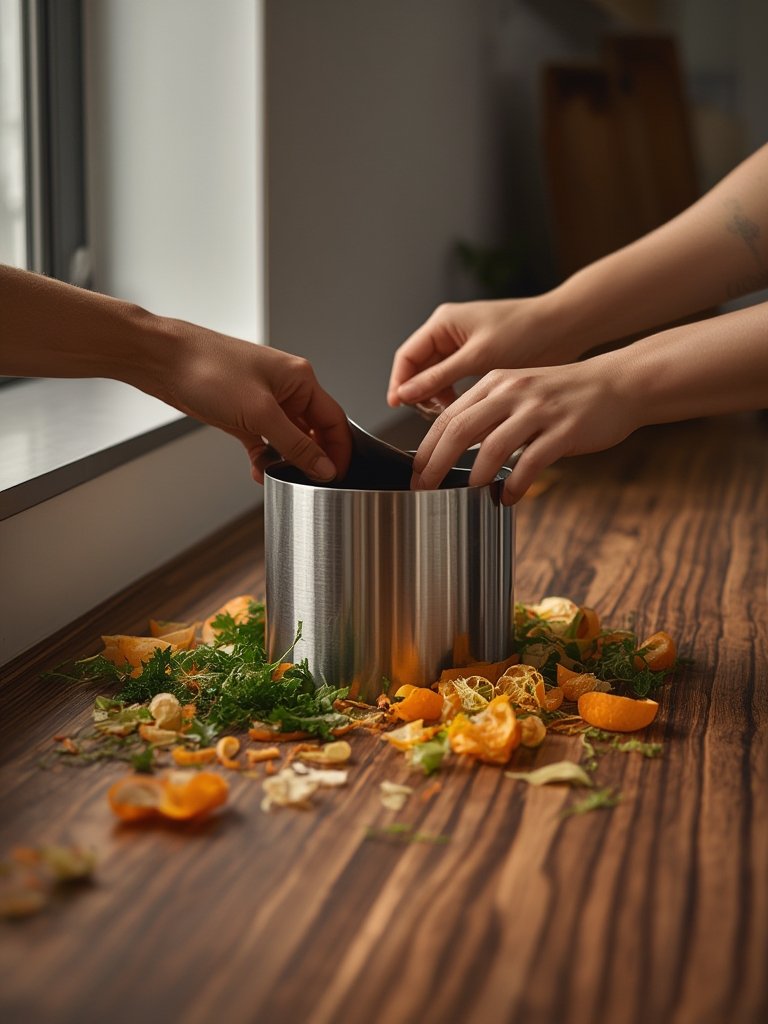
- To avoid fruit flies, freeze especially juicy or pungent scraps like melon rinds or banana peels and empty into the bin just before full collection.
- Compare smart bin models on their cycle time and noise—some are too loud for small apartments or take 10+ hours per run.
If maximizing kitchen efficiency matters, you may also want to look at space-saving kitchen gadgets that work alongside your bin. For small apartments, our guide to apartment kitchen gadgets offers more kitchen organization solutions.
Advanced Analysis: Pitfalls and Real-World Issues
Household composting sounds simple, but users face several frustrations with countertop compost bins. Here’s what can go wrong—and what those “top 5” lists rarely tell you.
Common Pitfalls and Complaints
- Odor and pests: Filters saturate, lids leak, or emptying is neglected. Even with “odor-proof” claims, most bins eventually develop a smell if not emptied/maintained. Fruit flies and gnats are a real risk in summer.
- Limited capacity: Electric units process only small batches each cycle. Families who cook often may find themselves running (and cleaning) their “smart” bin daily.
- Noisy cycles: Many electric bins are louder than expected—comparable to a dishwasher or blender. If you have thin walls or open-plan living, check decibel ratings (often missing from product specs).
- Upfront and recurring cost: Compared to outdoor bins, electric countertop models cost up to 10x more per liter of capacity, and filter replacements add a hidden ongoing cost (see table below).
- Not all food waste is accepted: Neither all devices nor all cities accept meat, bones, dairy, or “compostable plastic.” You must check both device guidelines and municipal rules—many units don’t advertise these restrictions clearly.
- Durability and service: Reviewers often cite cheap hinges or lids. Electric units get poor marks for lifespan, repairs, or warranty service—issues ignored by many “best of” guides.
- Data privacy and IoT: Many smart bins collect usage and environmental data. Few reviews analyze app security, data sharing, or future support.
Cost Comparison Table
| Type | Initial Cost (USD) | Recurring Costs | Capacity | Active Work |
|---|---|---|---|---|
| Non-electric countertop bin | 20-60 | Filter/liner: 60-180/year | 3-5L typical | Manual emptying, cleaning |
| Electric countertop composter | 300-700 | Filter/parts: 50-150/year + electricity | 1-4L/cycle | Regular cleaning & filter swap |
| Outdoor bin/tumbler | 60-200 | Very low, occasional repair | Large (varies by model) | Manual turning |
| Bokashi/worm bin | 50-150 | Bran/bedding: 30-60/year | Varies | Hands-on |
For a broader look at complementing your kitchen routine, our guide to advanced kitchen tools and trending kitchen gadgets may be helpful. If you’re passionate about effortless cooking and minimizing effort, check out our solutions for effortless cooking.
What the Statistics Say
- Countertop compost bin market size is $500 million in 2024 and growing much faster than traditional composters. Still, adoption rates remain a small minority among households.
- Market data shows most growth coming from first-time purchasers in cities and apartments (source).
- Sustainability certifications for bins are inconsistent—look for “ETL” or “UL” on electric units for safety, and “Lomi” has obtained third-party verified carbon credits (source).
How Environmentally Beneficial?
Nearly all composting—countertop, outdoor, or city-wide—reduces methane, a potent greenhouse gas, compared to the alternative of tossing food in landfill. Reliable life-cycle assessments indicate that diverting 1 metric ton of food scraps from landfill can cut 0.2-0.6 tons of CO2-equivalent emissions. Electric composters add some energy use, but most life-cycle calculations say the methane prevented far outweighs these modest emissions. Non-electric bins have the lowest footprint, provided you empty and clean them regularly.
Conclusion
Countertop compost bins help more people reduce kitchen waste and climate impact, thanks to better odor control, smaller sizes, and new “smart” features. Still, adopting a countertop compost bin isn’t a silver bullet: you’ll need to watch for filter and liner expenses, noise, and real-world limits in accepted materials. Choose the right bin for your household’s size, routine, and local composting program—but remember, no bin replaces the need for regular emptying and honest maintenance.
Thinking beyond composting? See our latest roundups on Amazon kitchen gadgets and must-buy kitchen gadgets for ways to upgrade your whole cooking experience.
Ready to make your kitchen greener? Choose a countertop compost bin that fits your needs, check your local program’s rules, and start turning scraps into something better—one meal at a time.
FAQ
Do countertop compost bins really control odors?
Most bins work well if you change charcoal filters on time, empty them every few days, and use recommended liners or newspaper. However, neglecting these steps almost always leads to smells and pests.
Can I put meat, dairy, or compostable plastics in my bin?
It depends. Many bins and most municipal programs forbid these items due to odor, pests, and compost quality. Check both your device’s manual and your local composting rules before adding anything but fruit, veggies, coffee, or grains.
How long do electric countertop composters last?
Lifespan varies. Reviews suggest that cheaper units may burn out or malfunction within a year, while premium models last longer. Warranties and reliable replacement support are important; check before you buy.
Is using a countertop compost bin actually eco-friendly?
Yes—diverting food waste from landfill reduces methane emissions, which are many times more harmful than CO2. Electric bins use some energy but most studies say their climate benefits still outweigh operating costs.
Which certifications should I look for when buying?
For electric units, look for ETL or UL certification (North America) or CE (Europe). For non-electric, ensure components are food-grade and BPA-free. “Verified carbon credits” are a plus but rare.
—