

In today’s compact living spaces, maximizing kitchen efficiency is paramount. Affordable kitchen gadgets designed for small kitchens can transform limited areas into functional culinary hubs. This article explores essential tools that combine practicality with affordable pricing, ensuring you get the most out of your small kitchen without compromising on quality.Affordable Kitchen Gadgets for Small Kitchens
Affordable Kitchen Gadgets for Small Kitchens:
Small kitchens demand a different mindset than larger spaces: efficiency is not optional, it’s essential. Owners must reckon with constrained footprints,Affordable Kitchen Gadgets for Small Kitchens4 fewer cabinets, and often awkward layouts that force compromises. The most pressing physical issues are limited counter space that becomes unusable when cluttered, shallow or irregular storage that wastes vertical volume, and congested appliance zones where one device blocks access to another. Equally important are less visible constraints: limited electrical outlets, ventilation challenges near cooktops, and the mental friction of hunting for items in a tiny pantry.
Practical solutions begin with a granular needs assessment: track which tasks you perform daily, which tools are used weekly, and which items sit idle. That mapping reveals priorities for what must be countertop-accessible versus what can live tucked away. Organization is about purposeful placement—creating defined work zones for prep, cooking, and cleanup so movement is minimized. Space utilization grows from three strategies: reduce, nest,Affordable Kitchen Gadgets for Small Kitchens4 and elevate. Reduce by choosing fewer, better tools; nest by favoring stackable or collapsible items; elevate through vertical shelving, rail systems, and magnetic storage that reclaim walls and backsplashes.Affordable Kitchen Gadgets for Small Kitchens4
Versatility in gadgets is vital because multi-function items shrink inventory and surface demands, but choose wisely: multifunctionality should match core habits, not novelty features. Consider weight and bulk for frequent stowing, ease of cleaning, and durability—appliances that are hard to maintain become permanent counter occupants. Small-kitchen planning also benefits from modular thinking: portable caddies, drawer dividers, and uniform containers that play well together and simplify retrieval. Finally, regular audits—seasonal purges and a simple inventory—prevent creep. The goal is not to maximize possessions but to orchestrate a compact, reliable system that frees counter space, speeds routines, and makes a small kitchen feel intentionally spacious.Affordable Kitchen Gadgets for Small Kitchens4
Essential Affordable Kitchen Gadgets
- Compact blenders: Small blenders (personal-size or mini countertop models) are built for single-serve smoothies, quick purees, baby food and salad dressings. Look for motors in the 200–600 watt range with stainless-steel blades and a pulse function—enough power to crush ice intermittently and emulsify dressings without the bulk of a full-size blender. Many affordable units double as travel tumblers with screw-on lids, so you blend, seal and go; removable jars and blades that are dishwasher-safe shorten cleanup time. Choose clear, graduated jars for accurate portions; lightweight plastic or Tritan construction keeps costs down while still resisting cracks. Typical price range: $25–$70.,
- Multifunctional food processors: Opt for a 3–7 cup model that includes a chopping blade, reversible slicing/shredding disc and a dough blade—this size handles chopped vegetables, quick salsas and small doughs without taking up serious counter area. Important details: a wide feed chute for halved produce (reduces prep time), snap-on lids for safety, and blades/discs that nest or clip into the bowl for tidy storage. Because these units can replace a box grater, manual slicer and small mixer, they deliver broad capability at low cost. Prioritize models with easily removable, dishwasher-safe components and non-slip feet for stable operation during tougher tasks.
- Stackable measuring cups and spoons: Beyond saving drawer room, quality stackable sets improve accuracy and convenience. Seek stainless-steel or rigid-rubber cups with etched measurements (on multiple surfaces) and handles designed to lock together. Collapsible silicone options compress even further and tolerate heat for hot liquids. Multi-use designs (cups that double as scoops or prep bowls) reduce the number of tools you need. Durable materials prevent warping and ensure long-term measurement consistency.Affordable Kitchen Gadgets for Small Kitchens4

Buying tips: prioritize removable, dishwasher-safe parts, simple controls and honest power ratings—small appliances that do a few things very well add the most value in tight kitchens.
Innovative Space-Saving Solutions
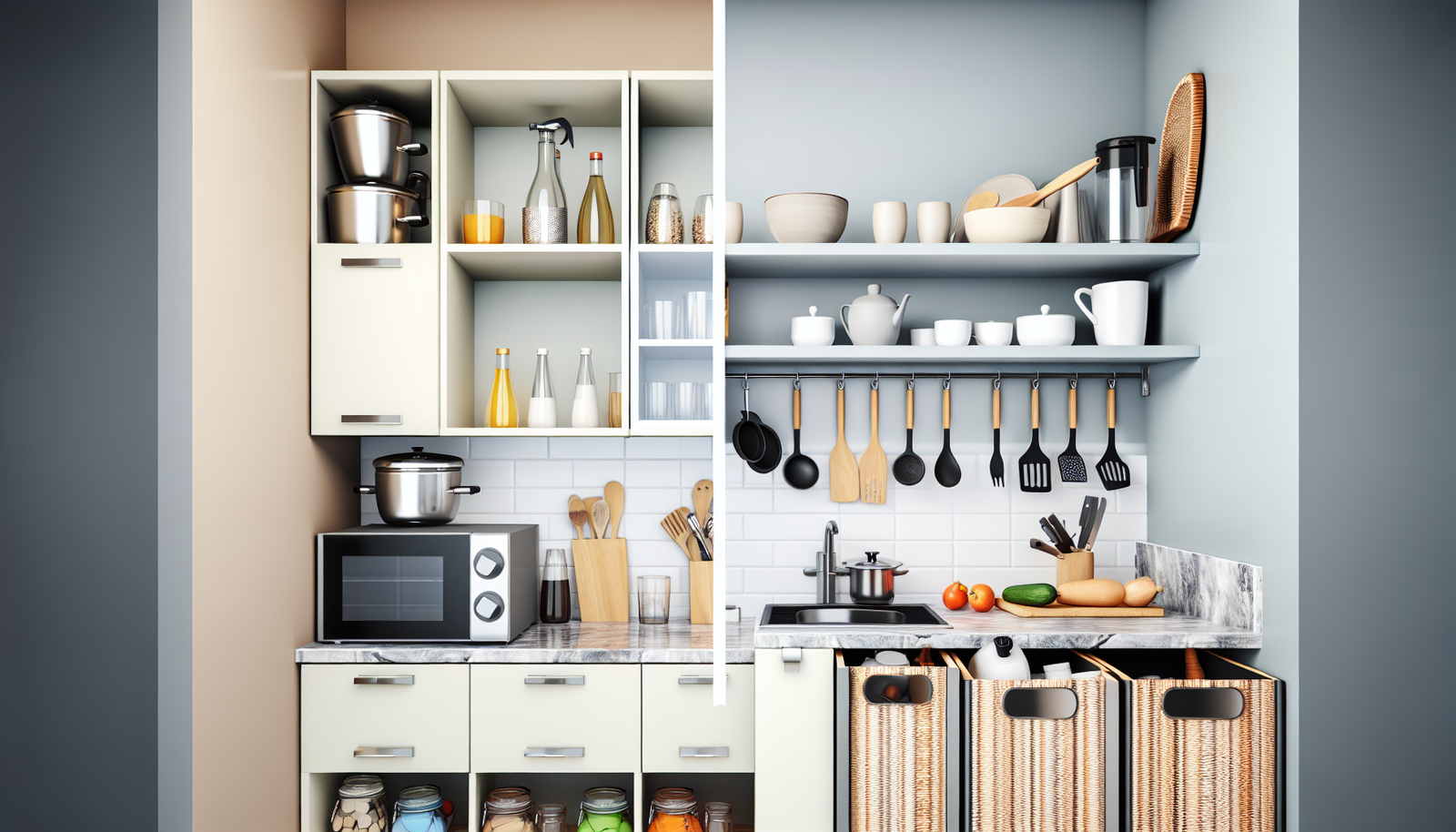
Wall-mounted racks, hanging organizers and nesting cookware are simple, affordable ways to reclaim precious countertop and cabinet real estate in a small kitchen. Choose wall-mounted rails and racks with modular attachments—S-hooks, baskets, spice rails and utensil holders—to create a vertical, customizable workstation above the sink or along an empty wall. Metal rail systems with a 10–25 lb per-foot load rating handle pans, colanders and frequently used tools while leaving surfaces clear; for renters, look for heavy-duty adhesive hooks or tension-rod-mounted organizers that avoid drilling.
Hanging solutions extend beyond pot racks. Ceiling- or under-shelf-mounted rails, pegboards and magnetic strips free drawers and counters: a magnetic knife strip saves a full drawer, while magnetic spice jars can line a backsplash. Over-the-sink and over-stove narrow shelves add a tiered plane for drying, soap, or small potted herbs without eating counter space. Inside-cabinet door hangers and slim, vertical lid organizers turn wasted faces into storage for cutting boards, baking sheets and lids, preventing the jumbled pile that steals usable shelf height.
Nesting cookware and collapsible tools multiply functionality by minimizing footprint. Opt for nesting pots, mixing bowls and measuring sets designed to stack securely; silicone or felt liners between pieces prevent scratches and make retrieval quieter. Cookware with removable or folding handles saves significant vertical space in drawers or on racks. When selecting nesting sets, prioritize consistent diameters and slightly tapered walls so pieces slide neatly without wedging.
Practical details matter: measure clearances, account for handle swing and reach zones near stove and sink, and distribute weight to studs when hanging heavy items. Combine a couple of systems—a narrow rail above the counter, a pegboard for odd tools, and a nesting cookware set in a drawer—to declutter work surfaces and create a streamlined, highly functional small kitchen.
Budget-Friendly Smart Technology
Smart gadgets have moved beyond novelty and into practical tools for compact kitchens, offering both space efficiency and real utility at budget-friendly prices. Affordable devices often prioritize a small footprint and focused functionality—*not* all smart kitchens require expensive, full-sized appliances. Look for items that combine intelligence with compact design: **smart scales** that sync with recipe apps and nutrition trackers, **programmable rice cookers/multi-cookers** with steaming and slow-cook modes, and **app-controlled countertop ovens, kettles, or sous-vide sticks** that slot neatly into limited counter space.
These gadgets deliver distinct advantages for small kitchens:Affordable Kitchen Gadgets for Small Kitchens4
– Precision and waste reduction: smart scales and app-guided recipes remove guesswork, helping you buy and cook only what you need.
– Time-shifting and automation: programmable rice cookers and slow-cook functions let you schedule meals so counters stay clear until serving time.
– Multipurpose performance in compact form: many budget smart cookers double as steamers, rice pots, and slow cookers, replacing multiple single-use items.
– Energy and workflow efficiency: app control and timers let you operate appliances remotely or set low-power standby schedules, which matters in small spaces where every outlet and watt counts.
When choosing affordable smart devices, focus on practical compatibility and resilience. Prefer Bluetooth or Wi‑Fi models with stable apps, but ensure there are manual overrides if connectivity fails. Check power consumption and footprint measurements, and verify the app supports your phone and any voice assistants you use. Be mindful of data and privacy settings—budget gadgets sometimes have limited security features. Finally, prioritize devices that deliver tangible everyday benefits (consistent rice results, accurate portioning, hands-off cooking) rather than flashy extras. In small kitchens, affordable smart tech works best when it reduces clutter, saves time, and consolidates tasks—making meal prep simpler without demanding more space or a larger budget.
Maintaining and Caring for Your Kitchen Gadgets
Cleaning: Wipe gadgets after every use to prevent food buildup—use a soft cloth or sponge with mild dish soap. For crevices and seams, a small brush or old toothbrush removes trapped debris; avoid metal scouring pads on coated surfaces. Removable parts should be soaked in warm, soapy water and air-dried completely before reassembly to prevent mold and odors. For mineral deposits, use a 1:1 white vinegar and water solution for short soaks, followed by thorough rinsing; avoid vinegar on certain rubber seals and stone finishes. For wooden handles, cutting boards, or utensils, clean with soap and water, dry immediately, and condition monthly with food-safe mineral oil to keep the wood from cracking.
Routine maintenance schedule:
- Daily: Wipe surfaces, empty crumbs and moisture.
- Weekly: Deep clean detachable parts, check blades for residue.
- Monthly: Descale appliances that contact water, oil moving metal parts per manual, and sharpen knives as needed.
- Every 6–12 months: Inspect cords, seals, and gaskets for wear; replace filters and worn components.
Storage recommendations: Store small tools vertically in narrow containers or magnetic strips to save counter space and prevent jostling. Use drawer inserts to separate blades and fragile attachments; stackable bins keep multiples organized. For appliances, use an “appliance garage” or a lower cabinet with a pull-out shelf so heavy items aren’t dragged across counters. Keep cords neatly coiled with Velcro ties and store accessories together in labeled pouches so nothing gets lost.
Prolonging life: Always use gadgets within their intended capacity, allow motors to cool between long runs, and avoid overfilling. Replace rubber seals and filters promptly—neglecting them strains motors and can cause leaks. Protect electronics from steam and splashes; wipe contacts dry and remove batteries for long-term storage. Small investments in sharpening, replacing gaskets, or simple lubrication extend usefulness and prevent clutter from premature replacements—critical in a tight kitchen where every gadget must earn its space.
Conclusions
In summary,affordable kitchen gadgets for small kitchens are essential for enhancing functionality and maximizing your cooking experience. By choosing the right tools, you can create an organized, efficient space where creativity thrives. Invest in these gadgets to spice up your culinary adventures while catering to the constraints of small kitchen living.
—