

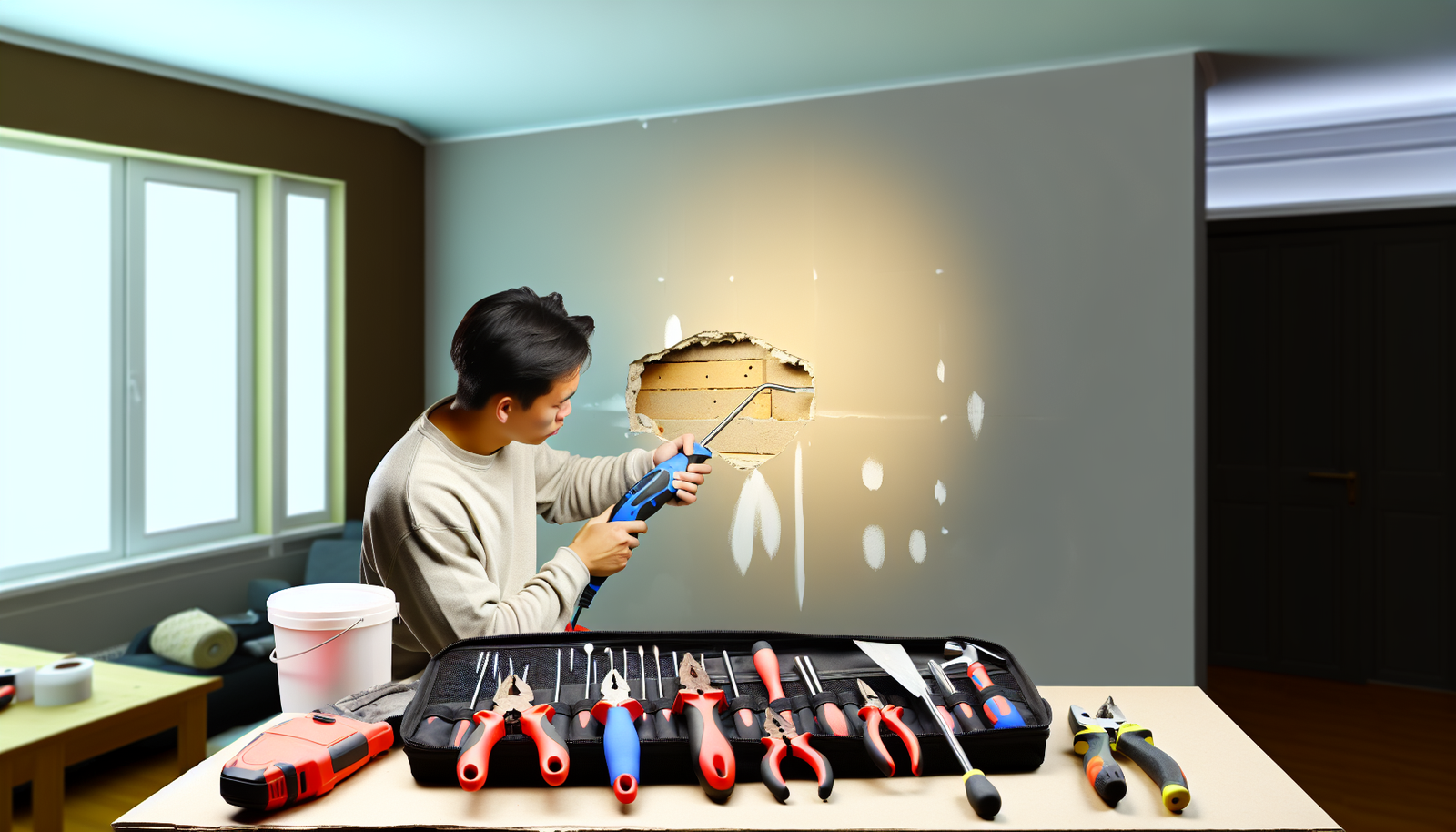
How to Patch a Hole in Drywall with this easy step-by-step guide. Learn what materials to use, proven techniques, and expert tips to achieve a smooth, professional-looking finish every time.
ensuring a smooth and professional-looking finish.
How to Patch a Hole in Drywall 1
Drywall is a manufactured panel system composed primarily of a soft core of mineral gypsum encased between two sheets of heavy paper. The gypsum core provides compression strength and fire-resistant properties, while the paper facings give tensile strength and a paintable surface. Modern boards often include additives and reinforcements — glass fibers for crack resistance, waxes for moisture repellency, or vermiculite and other fillers to improve fire performance. Thicknesses commonly range from 1/4″, 1/2″, to 5/8″, and specialized formulations exist for sound control, moisture resistance, and enhanced impact durability.
The production process fuses the gypsum slurry between continuous paper liners and sets the board under controlled heat and pressure. After curing, boards are cut to size and sometimes laminated with extra faces or non-paper facings (e.g., fiberglass mats) for niche applications. The way boards are joined — taped and covered with joint compound — is as important to a finished wall as the board itself; proper seams and fastener placement are integral to preventing later failures.How to Patch a Hole in Drywall
Historically, drywall emerged in the early 20th century as a faster, cheaper alternative to traditional three-coat plaster. Innovations by manufacturers, coupled with standardized framing techniques, made drywall the dominant interior wall finish in modern construction due to speed of installation and uniformity of finish.
Advantages include speed and cost-effectiveness, fire resistance from the gypsum core, relatively good acoustic qualities (improvable with specialized panels), and ease of finishing and decorating. Common issues homeowners encounter are impact holes and dents, nail pops and loose fasteners, seam cracks from structural movement, and moisture-related damage that breaks down the gypsum core and paper facings. Understanding these material behaviors explains why some failures look like surface damage while others indicate deeper deterioration — and why accurate assessment and proper preparation are the logical next steps.How to Patch a Hole in Drywall
Assessing the Damage and Preparing the Area
Start by identifying the hole’s true size and shape—this determines the repair method. Use a tape measure to record the maximum dimensions (diameter for round holes, width and height for irregular ones). Holes under about 1/2″ (nail or screw holes) usually require simple filler; 1/2″–6″ often need a patch or self-adhesive fiberglass mesh; anything larger typically needs a cut-back to clean edges and backing (a wood backing, a patch piece, or stud anchoring). While measuring, look beyond the visible opening for crumbling paper, soft gypsum, mold, or water stains that indicate deeper damage.How to Patch a Hole in Drywall
Thorough cleaning and edge preparation are essential for a lasting, inconspicuous repair. Follow these steps:
- Use a utility knife to trim ragged paper and loose gypsum until you reach firm material. Cut the hole to a regular shape (square or circle) if a structural backing or patch will be used—this makes fitting and fastening far easier.
- Remove any loose debris with a stiff brush, then vacuum the cavity to clear dust and small particles. For tight cavities, a thin putty knife or awl can pry out debris.
- Wipe the surrounding area with a slightly damp cloth to remove fine dust, but do not saturate the drywall—excess moisture weakens gypsum and encourages mold.
- Inspect behind the wall: shine a flashlight into the hole and gently probe for hidden wiring, plumbing, insulation, or rot. If you suspect live wires, stop and shut off power before proceeding.
Take safety and containment steps: wear a dust mask and safety goggles, gloves, and use plastic sheeting to limit dust spread. Turn off electricity at the breaker if cutting near outlets. Proper preparation—clean, solid edges and a dust-free surface—ensures the compound and patch bond correctly, reduces cracking, and produces a smoother final finish.How to Patch a Hole in Drywall
Choosing the Right Materials and Tools
Knowing which materials and tools to buy prevents delays and gives a professional finish. Key materials include:How to Patch a Hole in Drywall
- Joint compounds – All-purpose (ready-mixed) for general use, setting-type (powder) for quick hard fills and minimal shrinkage, topping or lightweight finishing compounds for final coats. Choose setting-type (20/45/90 minute set) for deep repairs and all-purpose for feathering and easy sanding.
- Patches and backing – self-adhesive fiberglass mesh for small holes, paper-backed or metal patches for larger openings, or a drywall patch piece with wood backing for holes over ~4–6″.
- Tape – paper tape for seams and structural repairs (stronger, less likely to crack), fiberglass mesh tape for quick applications and small repairs.
- Primer/Sealer – water-based PVA for fresh repairs, stain-blocking primer (shellac or oil-based) when tackling stains or smoke residues.
- Fasteners and adhesives – drywall screws, construction adhesive or patching adhesive for securing backing or patches.
Essential tools:
- Putty knives (multiple widths, 4″–12″) with flexible stainless blades for smooth feathering.
- Mixing paddle for powder compounds, mud pan or hawk, and a margin trowel for tight spots.
- Sanding tools – sanding block or sponge (100–220 grit), optional pole sander or vacuum-backed sander to reduce dust.
- Utility tools – keyhole saw or oscillating tool for precise cuts, small clamps or backing strips.
Tips: invest in reputable brands, check compound shelf-life and VOC levels, match compound type to repair depth (use setting compounds for bulk fills, topping compounds for final coats), and favor stainless blades and dust-capturing sanders to save time and yield a seamless finish.
Patching the Hole: Step-by-Step Guide
Begin by preparing the hole into a clean, regular shape — a square or rectangle is easiest to patch. For small nail or screw holes, simply press a small amount of compound into the depression with a putty knife, let it dry, then sand and repeat until flush. For medium holes (about 1″–6″), place a backing behind the drywall: insert a thin strip of scrap wood or use a self-centering drywall clip, hold it in place, and fasten a patch to it so the patch sits perfectly flush.
For larger holes, cut out the damaged area to a straight-edged opening and measure a replacement piece of drywall that fits snugly. Secure the new piece to the studs or to added furring strips, ensuring the patch is perfectly level with the surrounding wall. Tape the seams with paper or mesh tape, embedding it into a thin first coat of compound.How to Patch a Hole in Drywall
Step-by-step application:
– Apply the first coat of joint compound thinly, pressing firmly to fill gaps and to bed the tape; remove excess and smooth the edges.
– Allow the compound to dry fully (follow the compound’s drying time; setting-type compounds dry faster).
– Apply a second, wider coat, feathering the edges at least 2–3 inches beyond the first layer to blend into the wall.
– A final skim coat should be very thin and extend even further to erase any visible ridges.
Sanding and smoothing:
– Lightly sand between coats with a sanding block using medium grit (120–150) to flatten ridges; finish with finer grit (180–220) if needed.
– Use a fine, damp sponge to knock down dust and to subtly refine the surface before the final coat dries.
– Protect the surrounding area from dust and wear a mask.
Patience and precision matter: multiple thin coats, careful feathering, and full drying between steps produce a patch that disappears. Rushing or over-sanding risks gouging the paper face and creating more work.
Finishing Touches and Maintenance
Once the repair is smooth, the next critical phase is achieving a seamless visual match. Begin by sealing the repaired paper and joint compound with a primer suited to the situation: use a drywall/PVA primer for clean repairs, a stain‑blocking (shellac or oil‑based) primer if there are water, smoke, or grease stains, and a bonding primer for glossy surfaces. Spot‑priming only the repair can work, but for best invisibility consider priming and painting the entire wall section between corners to eliminate subtle finish differences and sheen shifts.
Match paint sheen first—flat, eggshell, satin, semi‑gloss—because sheen differences reveal repairs even if color is exact. When painting, use a high‑quality brush for cutting in, then a roller with a nap length that matches the existing wall texture. Apply thin, even coats and allow full drying between coats; back‑rolling (rolling immediately after cutting in) helps blend brush strokes into the field. If the wall has a texture (orange peel, knockdown), replicate that texture before priming using aerosol texture, a stomp brush or knockdown knife, then prime the texture for uniform absorption.
For maintenance: control indoor humidity (below 60%), fix plumbing leaks promptly, avoid hanging heavy items on unsupported anchors, and use felt pads on furniture to prevent scuffs. Keep a small, labeled container of the room’s paint for quick touchups; clean the surface before repainting and sand lightly to create key for new paint. Inspect patched areas seasonally for hairline cracks—use paintable acrylic caulk for trim/edge gaps and a thin skim coat if shrinkage occurs.
Further learning: manufacturer tech sheets from USG, Sherwin‑Williams and Benjamin Moore; articles and videos from This Old House and Fine Homebuilding; local hardware store workshops. Common mistakes to avoid:
- Skipping primer or using the wrong primer.
- Mismatched sheen or texture.
- Applying heavy paint/compound coats—causes visible ridges and cracking.
- Rushing dry times—leads to poor adhesion and finish defects.
Conclusions
Patching a hole in drywall is a straightforward process that can greatly enhance the appearance of your walls. By following the steps laid out in this guide, you can achieve a professional finish with minimal effort. Remember, practice makes perfect, and soon, you’ll be tackling more complex repairs with confidence.