

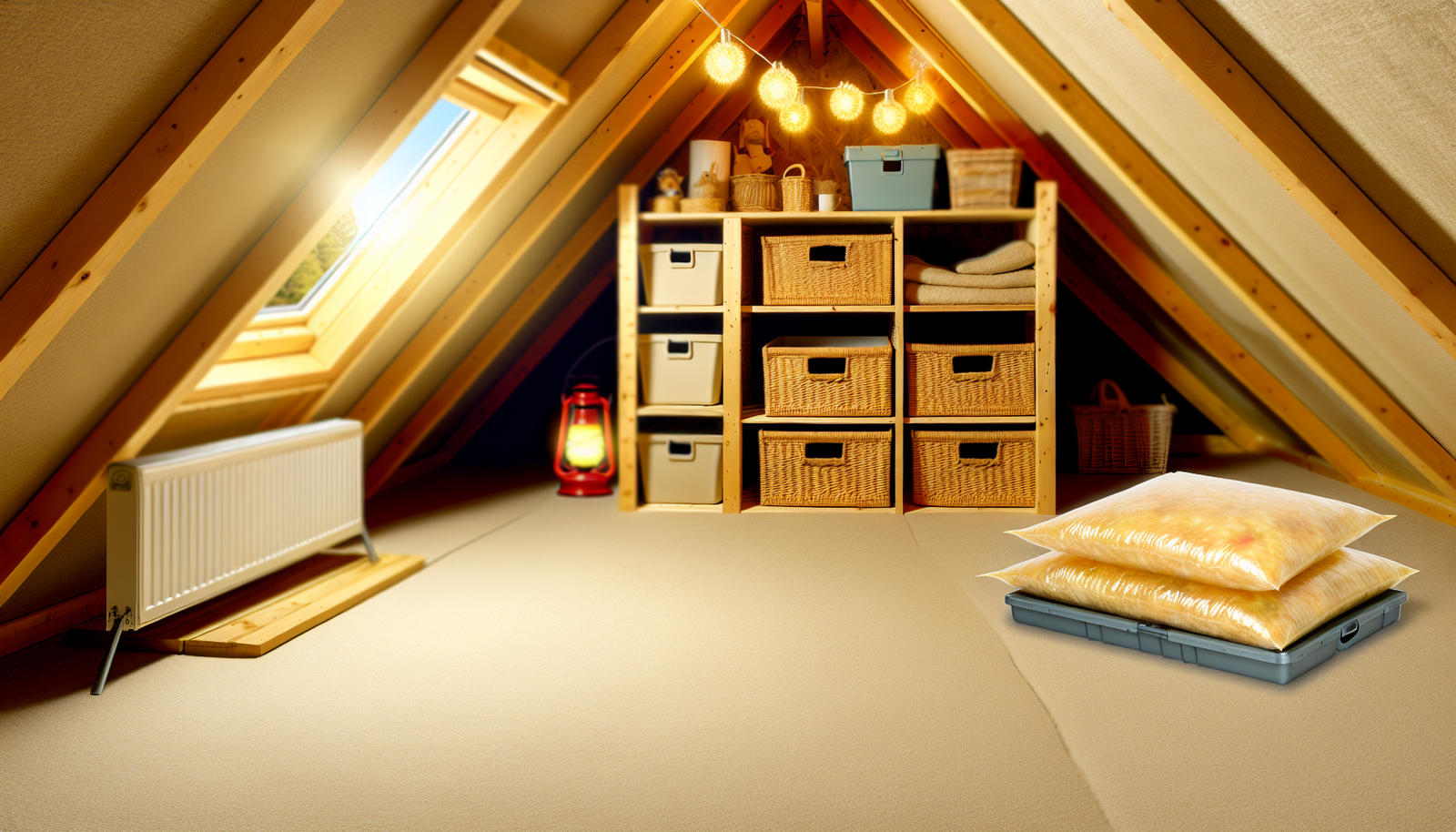
Insulating your attic floor is a crucial step in maintaining energy efficiency and comfort within your home. This process not only helps reduce heat loss but also contributes significantly to lowering energy bills. In this article, we will explore various insulation methods, materials, and best practices for optimizing your attic space.How to Insulate Your Attic Floor Effectively
How to Insulate Your Attic Floor Effectively
Attics are more than empty voids above ceilings; they function as a thermal buffer, a ventilation chamber, and sometimes as service-space for ducts and equipment. Their basic characteristic is that they sit between the conditioned living space and the outdoors, so the attic’s temperature strongly influences heat flow into and out of the home. Heat transfer occurs through three mechanisms: conduction through
An insulated attic floor serves as the primary thermal boundary for most homes, keeping conditioned air where it belongs. Without adequate insulation and air sealing at the attic floor, heat loss in winter and heat gain in summer accelerate, increasing HVAC runtime and costs. Many studies estimate that a substantial portion of a home’s heat loss—often around a quarter or more—occurs through the es.
Because attics often contain ducts and appliances, insulating the attic floor also protects HVAC efficiency and comfort. For optimal performance, insulation must be paired with robust air sealing and appropriate ventilation to control moisture and prevent convective bypass—addressing insulation without sealing leaves much of its benefit unrealized.How to Insulate Your Attic Floor Effectively1 positively
Types of Insulation Materials
Cellulose (blown-in): Dense-packed or loose-fill cellulose is made from recycled paper treated for fire resistance. Typical R-value is about R-3.2 to R-3.8 per inch. Pros: excellent at filling cavities and irregular spaces, good thermal and sound performance, high recycled content, and relatively low cost for retrofits. Cons: it can settle over time (reducing effective R-value), is hygroscopic (so existing moisture problems must be resolved first), and requires professional blowing equipment for best results. Best for cold and mixed climates when installed at proper depth.
Fiberglass (batts and loose-fill): Fiberglass batts run about R-2.9 to R-3.8 per inch, while loose-fill is similar by density. Pros: widely available, low cost, noncombustible, and easy for DIY in standard joist bay sizes. Cons: performance suffers if compressed or poorly fitted; gaps around wiring and obstructions create thermal bridges. It offers limited sound control and can irritate skin and lungs during installation. Suited to moderate climates and new construction where framing is uniform.
Mineral wool (rock or slag wool): R-values approx R-3.0 to R-3.3 per inch. Pros: excellent fire resistance, good sound attenuation, resists mold and moisture better than cellulose, noncombustible. Cons: higher cost than fiberglass and slightly heavier. Good choice where fire performance and moisture tolerance are priorities.How to Insulate Your Attic Floor Effectively1 positively
Foam boards (rigid polyiso, XPS, EPS): R-values range widely: EPS ~R-3.6/in, XPS ~R-4.5/in, polyiso ~R-6 to R-6.5/in (thicker at low temps). Pros: high R per inch, continuous layer that reduces thermal bridging if sealed. Cons: more expensive, must seal joints, may require fire protection/covering, some types have moisture sensitivity. Ideal where space is limited or when adding a continuous layer above the attic floor or within an encapsulated assembly.
Spray foam (open- and closed-cell): Open-cell ~R-3.5/in, closed-cell ~R-6 to R-7/in. Pros: air-sealing and high R-value; adheres to irregular surfaces. Cons: highest cost, requires certified installers, closed-cell is less vapor-permeable and can trap moisture if used improperly. Choose based on budget and whether air-sealing is a priority.
Other options: denim (cotton) insulation, radiant barriers in hot climates to reduce heat gain, and hybrid systems combining materials for performance and cost balance. Consider R-value targets for your climate zone, space constraints, moisture issues, and required clearances around fixtures when selecting material.
Preparation for Insulation Installation
Before laying any insulation, complete a systematic preparation of the attic floor so the new material performs as intended and won’t trap moisture, create fire hazards, or hide unresolved damage.
Start by inspecting for moisture and structural issues. Look for stained or dark roof sheathing, damp or compressed existing insulation, rust on nails, and musty odors. Use a moisture meter where possible and trace stains back to their source: roof flashing, plumbing vents, HVAC condensate lines, or ice-damming. Repair active leaks and any rot or mold growth before proceeding; treat minor mold with appropriate cleaners and allow complete drying.
Next, ensure proper attic ventilation and airflow pathways. Verify that soffit and ridge or gable vents are clear and provide a continuous soffit-to-ridge flow. Install or repair baffles (air chutes) at the eaves to keep insulation from blocking intake vents. Confirm that bathroom and kitchen fans vent to the exterior and that dryer vents are intact and not discharging into the attic. Inadequate ventilation increases condensation risk and reduces insulation effectiveness.How to Insulate Your Attic Floor Effectively
Thoroughly clear and prepare the work area:
- Remove stored items or relocate them safely; inspect boxes for signs of pests.
- Create safe walkways on joists using boards to protect ceiling below and avoid stepping between joists.
- Replace or install attic lighting and a stable entry platform if needed—ensure breakers are off when working near wiring.
Address existing insulation and air leaks before adding new material. Decide whether to remove degraded or contaminated insulation; intact insulation can sometimes be layered but must be dry and clean. Seal common air leakage points—around plumbing stacks, recessed lights, chimneys, electrical penetrations, and attic hatches—using caulk for small gaps and low-expansion spray foam or approved fire-rated materials for larger openings. Maintain required clearances around flues and non-IC rated fixtures to meet fire codes.lation.
Installing Attic Floor Insulation
Begin by confirming the attic floor layout and joist spacing you established during preparation; accurate measurements determine insulation type, thickness and quantity. Measure the length and width of each bay and note obstacles (chimneys, pipes, hatches, recessed fixtures). For batt or roll insulation, add 1–2 inches to length measurements to allow for a snug friction fit. For blown-in systems, map areas and determine target depth for the chosen R-value.

Tools and safety gear: tape measure, utility knife and straightedge, insulation blower (rented) for loose-fill, insulation supports or netting, staple gun (for facer), caulking gun and low-expansion spray foam, fine-toothed saw for rigid board, work lights, knee pads, respirator (N95 or P100), gloves, long-sleeve clothing, eye protection.How to Insulate Your Attic Floor Effectively1 positively
For batt/mineral wool installation: cut batts with a sharp utility knife using a straightedge. Fit batts between joists so they fill the cavity edge-to-edge without compressing; compression reduces R-value. If using faced batts, face the vapor retarder down toward the conditioned space only if required and staple flanges to the joist sides to hold in place. Where bays are deeper than batt thickness, add a second layer perpendicular to the first to eliminate thermal bridging and cover joist faces.
For loose-fill: use an insulation blower to deliver material evenly to the target depth. Run the hose in a sweeping motion, build up edges first and finish middle areas, and verify depth with a marker board or ruler. Avoid packing; blown insulation should remain fluffy.How to Insulate Your Attic Floor Effectively
For rigid board: cut boards to fit, seal seams with foil tape and fill gaps with low-expansion spray foam. Keep clearance around heat-producing fixtures per manufacturer instructions.
Practical tips: stagger joints, maintain access panels with insulated removable covers, use supports or netting in long bays, avoid covering heat-producing fixtures, and periodically inspect for settling or gaps. Work methodically—measure twice, cut once—to ensure continuous, unmutilated coverage and maximum performance.How to Insulate Your Attic Floor Effectively1 positively

Benefits and Maintenance of Insulated Attics
Long-term benefits of a properly insulated attic floor extend well beyond immediate comfort. Reduced heat transfer lowers annual heating and cooling loads, producing measurable savings on energy bills year after year and often paying back the initial investment within a few heating seasons. Steadier indoor temperatures reduce HVAC cycling, which can extend the life of equipment and reduce maintenance costs. Insulation
Maintenance tips to preserve effectiveness:
- Inspect the attic annually and after major storms: look for moisture, staining, displaced or compressed insulation, animal droppings, and signs of roof leaks.
- Monitor depth and condition: use a ruler or thermal camera to check for settled cellulose or compressed fiberglass; top-up or replace when R-value is noticeably reduced.
- Keep ventilation paths clear: ensure soffit and ridge vents, baffles, and exhaust ducts are unobstructed to prevent moisture buildup.How to Insulate Your Attic Floor Effectively
- Air-seal first, then maintain: check for new penetrations around pipes, wiring, and the attic hatch; maintain weatherstripping and draft seals.
- Address pest and mold promptly: remove contaminated insulation and repair entry points before re-insulating.
- Schedule a professional audit every 3–7 years or if you notice comfort or bill changes; use blower-door or infrared testing to find hidden issues.
Routine vigilance and targeted maintenance preserve R-value, protect structural integrity, and ensure your insulated attic continues delivering energy savings and comfort for decades.
Conclusions
Insulating your attic floor is a valuable investment that promotes energy efficiency and enhances home comfort. By understanding the materials, preparation steps, and installation process, homeowners can reap significant benefits. Regular maintenance can ensure the longevity of insulation, making your home energy-efficient for years to come.How to Insulate Your Attic Floor Effectively