

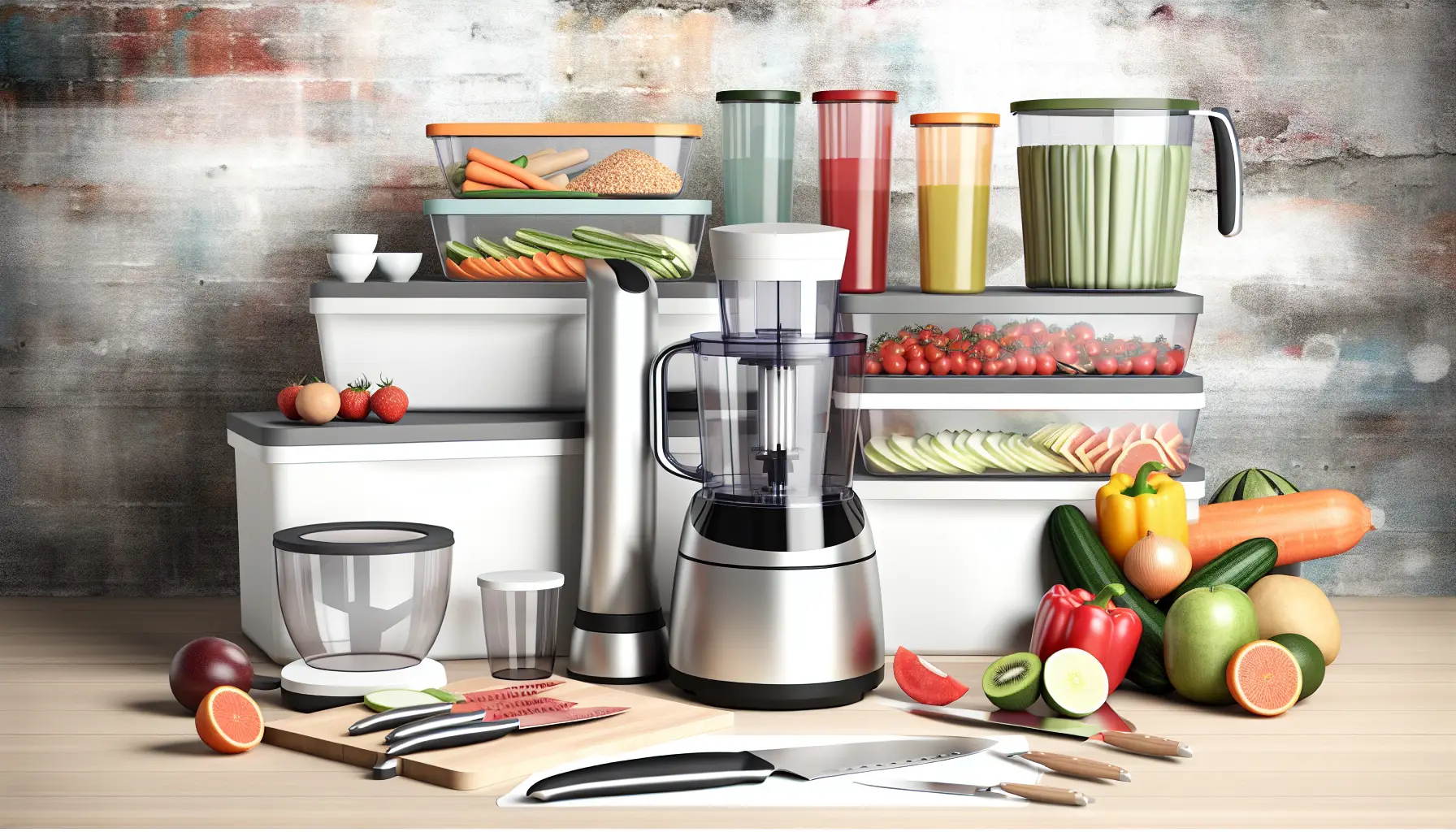
In today’s fast-paced world, meal preparation can be daunting. However, the right kitchen gadgets can make this process simpler and more enjoyable. This article delves into essential tools that enhance efficiency in meal prep, from slicing and dicing to cooking and storage, ensuring you spend less time in the kitchen and more time savoring delicious meals.
The Importance of Meal Prep kitchen Gadgets
Meal prep gadgets do more than speed up an evening—they rewire how you plan, shop and eat. In modern kitchens where time is scarce and choices abundant, the right tools turn sporadic cooking into a repeatable system: set-and-forget appliances and smart storage solutions let you batch, portion and preserve with minimal friction. That translates into tangible wins—time-saving through automated cooking cycles and hands-off methods; healthier eating because you control ingredients and portions; and reduced food waste by extending shelf life and turning leftovers into planned meals.
Think of gadgets as workflow multipliers. A reliable multi-cooker or slow cooker enables large-batch braises and grains that can be split into lunches, while a precision appliance like a sous-vide bath elevates proteins without babysitting the stove. A digital scale and simple portionable containers make calorie- and nutrient-focused planning realistic on busy days, and a vacuum sealer/quality freezer bags prevent freezer burn so surplus ingredients become future meals instead of compost.
Investing wisely matters: prioritize tools that offer versatility, durability and easy cleaning. Multi-function devices reduce clutter and improve cost-per-use; compact, stackable storage and uniform containers streamline refrigeration and make meal rotation visible. Ergonomic features and clear controls reduce the cognitive load of meal prep, making routine cooking feel less like a chore and more like a creative process.

Small behavioral shifts amplify gadget benefits: adopt batch-cooking sessions, label and date containers, plan menus around what’s on hand and treat gadgets as enablers rather than crutches. The right combination of time-saving appliances, preservation tools and portioning systems converts sporadic effort into consistent habits, frees up mental bandwidth for experimentation, and ultimately makes nourishing, home-cooked meals the path of least resistance.Kitchen Gadgets
Knife Sets and Cutting Tools
Choosing the right knives and cutting tools is fundamental to precise, repeatable prep. At the core are two essentials: a well-balanced **chef’s knife** (commonly 8–10″) for chopping, slicing and rocking motions, and a **paring knife** (3–4″) for peeling, trimming and detail work. Beyond those, consider a serrated bread/utility knife for fragile crusts and dense fruit, a boning knife with a narrow, flexible blade for trimming proteins, and a santoku if you prefer a shorter, flatter profile with granton dimples that reduce sticking.
When evaluating blades, know the trade-offs: **carbon steel** takes an edge easily and sharpens to a razor finish but needs oiling to prevent rust; **stainless steel** resists corrosion but varies widely in edge retention depending on alloy; **clad/forged** construction combines a hard core for edge retention with softer outer layers for toughness. Look for a full tang, solid bolster or a smoothly contoured transition between blade and handle for durability and balance. Hardness (Rockwell rating) affects both edge retention and brittleness—higher hardness holds an edge longer but can chip if misused.
Cutting surfaces matter as much as edges. Preferred options:
- End-grain wood —gentlest on edges, self-healing fibers, needs periodic oiling.
- Bamboo —harder than many woods, eco-friendly but slightly more abrasive.
- Plastic/composite —dishwasher-safe options and color-coding for cross-contamination control.
Maintenance practices preserve performance: hone regularly with a steel or ceramic rod to realign the edge; sharpen on a whetstone (1000–6000 grit progression) or professional service when honing no longer restores the bite; never use automated sharpeners indiscriminately on high-end blades. Hand-wash and dry immediately, oil carbon-steel blades, avoid cutting on glass/stone, and store knives on a magnetic strip or in sheaths to protect edges. For specialized prep, add a bench scraper, quality kitchen shears, a mandoline with safety guard, and a swivel peeler—each reduces wear on knives by handling tasks better suited to their design.
Food Processors and Blenders
Food processors and blenders are the workhorses that turn time-consuming prep into efficient batch work, taking over repetitive tasks so you can focus on assembly and seasoning. In meal prep they handle a wide range of jobs: from coarse chopping and shredding to fine purées, emulsifying dressings, kneading dough, and crushing ice for smoothies. Use a food processor to shred cabbage for slaws, dice onions for large pots of stew, grate cheese, or transform cooked vegetables into silky soup bases. Blenders excel at silky purées, smoothies, nut butters (when powerful enough), and emulsified sauces like mayonnaise or vinaigrette.
Key time-saving benefits include:
– Consistent results across large volumes, eliminating hand fatigue and uneven cuts.
– Faster transition from whole ingredients to ready-to-store components (sauces, dips, rice substitutes).
– Single-tool versatility that reduces the number of washing steps compared with multiple manual techniques.
When choosing between sizes and models, match the appliance to your cooking style. Consider:
– Capacity: mini choppers (0.5–1 L) for small tasks and single portions; 7–12 cup processors for family-scale batch prep; 1–2 L blenders for daily smoothies; high-capacity blenders for large soup or nut-butter runs.
– Power and performance: 400–700 watts suffice for general prep; 1000+ watts or high-RPM blenders are needed for nut butters, frozen fruit, or hot soup by friction.
– Useful features: variable speeds and pulse control, wide feed tube, multiple blades/discs (slicing, shredding, dough), tamper for blenders, dishwasher-safe bowls, and secure safety interlocks.
– Practical considerations: storage footprint, noise level, spare parts availability, and warranty.

For cooks who alternate between batch-cooking, baking, and blending drinks, a mid-size processor plus a high-speed blender or an immersion blender covers nearly every prep scenario while streamlining the workflow toward storage and reheating.Kitchen Gadgets
Storage Solutions for Meal Prep
Efficient storage is the backbone of reliable meal prep: it preserves flavors and nutrients, prevents cross-contamination, and lets planned menus survive a busy week. Choosing the right containers affects shelf life, portion control, and how easily leftovers are transformed into new meals. For dry bulk and pantry staples, **airtight jars** (glass with rubber seals or high-quality PET) keep humidity and pests out while making contents visible and accessible. Mason jars double as vessels for overnight oats, salads-in-a-jar, and small-batch pickles—glass won’t absorb odors or stain, and is oven- and microwave-safe when lids are removed.
For freezing and on-the-go use, **reusable silicone or PEVA bags** offer flexibility and reduced waste. Look for freezer-grade options with secure sliders or valve ports for vacuuming; they conform around food to minimize air pockets and freezer burn. For consistent portions and weekday lunches, **compartmentalized meal prep boxes**—preferably stackable, leakproof, and BPA-free glass or durable Tritan plastic—maintain separation of hot/cold elements and sauces. Removable inserts allow mixing textures at service time.
Practical storage technique matters as much as the container:
– Cool cooked food to near-room temperature before sealing to limit condensation and bacterial growth.
– Use clear containers or label lids with content and date to implement FIFO (first in, first out).
– Portion into meal-sized servings to reduce reheating and repeated exposure to air.
– Store dressings and crunchy toppings separately to retain texture.Kitchen Gadgets
Advanced options like vacuum sealing or oxygen absorbers extend freezer life and protect delicate herbs. Organize containers by size and modularity so they stack neatly, maximizing fridge/freezer real estate. Thoughtful storage translates to confident planning, fewer impulse purchases, and measurable waste reduction—turning batching and prep work into reliably fresh meals throughout the week.
Innovative Gadgets for Cooking and Baking
The right gadgets turn intimidating techniques into repeatable, everyday wins. An *instant-read thermometer* is one of the simplest precision tools that immediately elevates cooking. Choose a fast-response thermocouple or thermistor probe, learn target temperatures (e.g., 130–135°F for medium-rare beef, 165°F for poultry), and factor in carryover heat by removing food a few degrees early. Calibrate periodically and use the thermometer to check internal temps of casseroles, breads, and even candy — consistent results replace guesswork and reduce overcooking.
A *vegetable spiralizer* opens creative, healthy options beyond pasta substitutes. Handheld models are compact for single servings; crank or electric units handle batches and firmer vegetables like sweet potatoes. Blade choice (ribbon, spaghetti, fusilli) changes texture and sauce adhesion. Quick tips: use a firm core vegetable for uniform strands; par-cook for sturdier preparations; toss raw spirals with acid or oil to prevent sogginess. Spiralizing encourages new recipes — think zucchini ribbons with pesto, beet ribbons for salads, or spiralized stir-fry noodles.
*Batch cooking pots* — large Dutch ovens, multi-inset steamers, or programmable multi-cookers — let you concentrate on flavor building. Use them to braise proteins, simmer sauces, or steam multiple components at once. Look for features like even heat distribution, tight lids for moisture retention, and programmable timers. Techniques such as low-and-slow braising become effortless, allowing you to produce freezer-ready portions or versatile bases (stocks, ragùs) for quick weeknight assembly.
A precise *kitchen scale* is indispensable for cooking and essential for baking. Use the tare function to measure multiple ingredients in one bowl and prefer grams for consistency. Scaling recipes up or down is safer and more accurate with weight measurements, improving texture and rise in baked goods. Combined, these tools democratize advanced techniques — precise temps, exact weights, consistent cuts, and concentrated batches — enabling creativity and reliable outcomes in every meal-prep session.Kitchen Gadgets
Conclusions
Incorporating the right kitchen gadgets into your meal preparation routine can drastically enhance efficiency and enjoyment in cooking. By investing in quality tools, you not only save time but also elevate your culinary skills and creativity. Embrace these essential gadgets to make meal prep an effortless and rewarding experience.Kitchen Gadgets