

In the fast-paced world of cooking, having the right tools can significantly cut down the time spent on food preparation. This article explores essential kitchen tools specifically designed to enhance efficiency and make cooking a hassle-free experience. From cutting-edge gadgets to traditional utensils, discover how these tools can transform your kitchen routine.Essential Kitchen Tools to Save Time
Essential Kitchen Tools to Save Time
Having the right time-saving tools in the kitchen changes cooking from a chore into an efficient rhythm. Beyond convenience, these tools re-engineer the sequence of tasks: they compress multi-step processes, eliminate awkward transfers, and reduce repetitive motion so you spend less time and energy getting to the plate. For busy lives that demand quick weeknight dinners, short meal-prep windows, or batch-cooking for the week, tools that shave minutes off multiple tasks add up to hours saved each week and to lower mental load when planning meals.Essential Kitchen Tools to Save Time
At a functional level, time-saving tools work in three ways: they accelerate mechanical processes (chopping, blending, kneading), they combine steps (sear-and-simmer in one pot, or chop-and-mix in a single device), and they streamline cleanup and storage (dishwasher-safe parts, stackable containers, vacuum sealers). The result is faster prep, quicker finishes, and less friction between cooking stages — which keeps momentum and prevents plans from derailing on busy days.

Practical examples illustrate the point:
– Food processors and choppers: reduce hours of chopping to minutes by handling uniform dicing, shredding, and pureeing.
– Multi-cookers/pressure cookers: convert long braises and dried beans from hours to under an hour while freeing you to do other tasks.
– Immersion blenders: eliminate hot-liquid transfers and speed up soups, sauces, and emulsions.
– Vacuum sealers and stackable containers: enable batch-cooking and efficient storage so reheating replaces nightly prep.
– Smart timers and programmable ovens: take monitoring off your plate and prevent overcooking.
Investing in these time-saving tools also reduces waste, improves consistency, and makes healthier home-cooked meals plausible on tight schedules. They don’t replace skill, but they lower the barrier so good food fits realistic routines.
Versatile Utensils for Quick Meal Prep
Well-chosen, multipurpose utensils form the backbone of rapid meal prep. A **chef’s knife** is arguably the single most versatile tool: with a 7–10″ blade you can slice, dice, mince, julienne and butterfly without swapping tools. Mastering a few techniques—*rocking motion* for herbs, the *claw grip* for safety and speed, and push-cutting for root vegetables—cuts prep time dramatically. Equally important is keeping the blade sharp and using the right size for the task; a sharp knife reduces effort and produces cleaner cuts, which cook more evenly.Essential Kitchen Tools to Save Time
The right **cutting board** supports speed as much as knife skills. Opt for two sizes: a large, stable board for bulk chopping and a smaller board for quick tasks. Material matters—polyethylene boards are dishwasher-safe and low maintenance for raw proteins, while end-grain or hardwood boards are gentler on knives for vegetables and bread. Look for a board with a juice groove to contain liquids and prevent cleanup interruptions, and use non-slip feet or a damp towel underneath to keep the board steady so you can work confidently and quickly.
**Measuring cups and spoons** streamline both cooking and baking. Keep a set of nested dry cups and separate liquid measuring cups; use clear, graduated liquid cups for accuracy and a flat surface to level dry measures. For speed, measure sticky ingredients by spraying cups with oil first or use a small spatula to transfer every last bit. Nested sets save space and let you progress through mise en place faster—measure, stack, and set aside.

Practical habits that make these utensils faster in practice:
- Prep mise en place using one large board and move ingredients into bowls to reduce back-and-forth.
- Hone knives before each session; sharpen regularly.
- Use measuring cups to portion and transfer ingredients (batter, grains, herbs) quickly.
- Choose versatile extras—tongs, a bench scraper and a silicone spatula—to perform multiple tasks without tool changes.Essential Kitchen Tools to Save Time
Innovative Gadgets That Revolutionize Cooking
With knives and boards handling the basic prep, smart appliances take over the heavy lifting and transform elaborate recipes into attainable weeknight meals. A high-quality **food processor** does more than chop; with interchangeable discs and blades it shreds vegetables, slices uniformly, grates cheese, kneads dough, and purees ingredients in seconds. Use the pulse function for controlled texture — coarse salsa one moment, silky hummus the next — and process in measured batches to avoid overheating or uneven cuts. Choosing a wide feed chute and sturdy motor lets you tackle dense tasks like nut butters or pastry dough with far fewer passes than by hand.
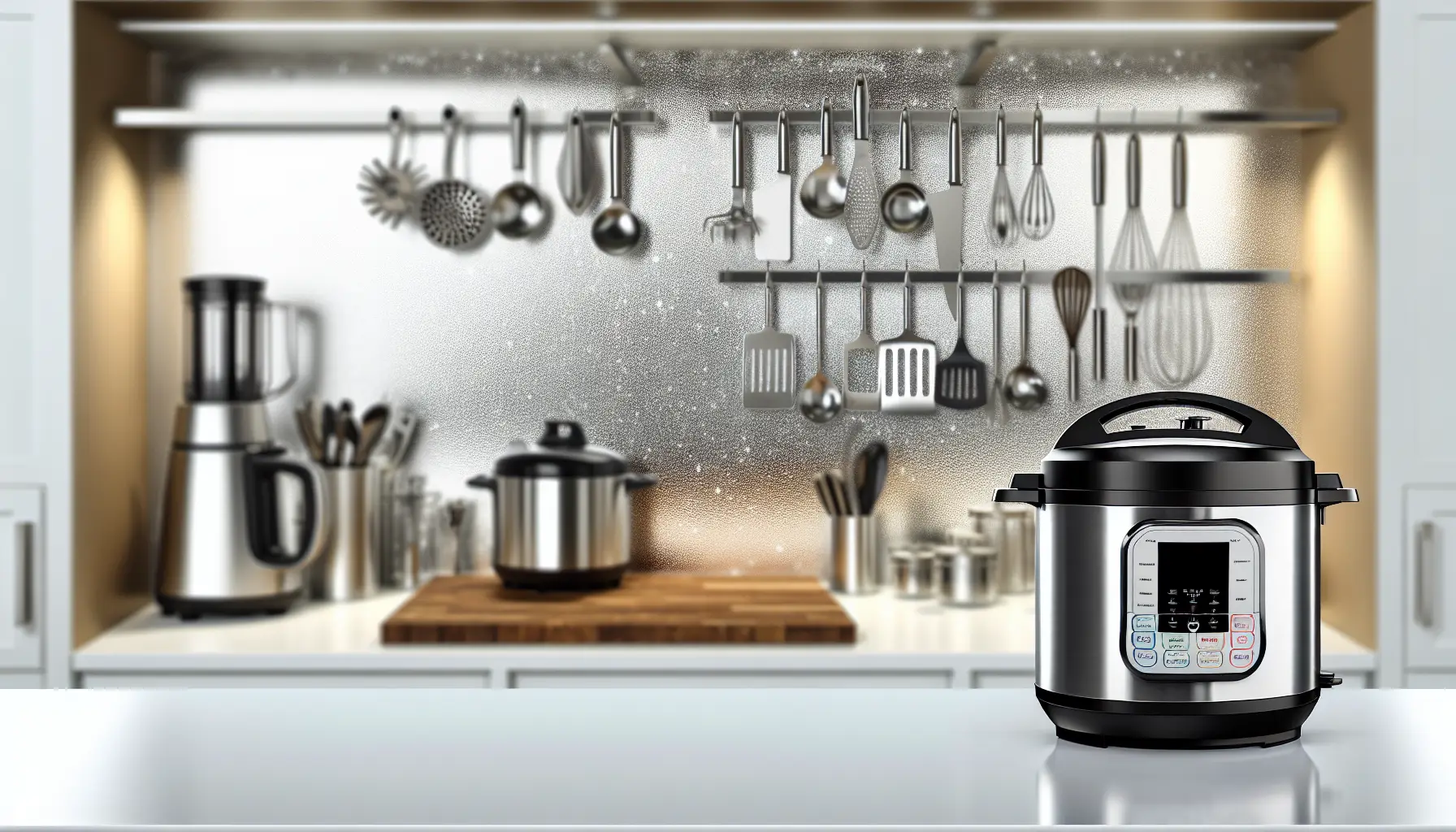
The **Instant Pot (electric multi-cooker)** collapses several appliances into one and saves time in three ways: dramatically shorter cooking through pressure, hands-off scheduling with programmable timers and delay-start, and integrated functions (sauté, steam, slow cook, yogurt) that reduce pot swapping. For complex dishes, brown aromatics with the sauté setting, stack ingredients, set a pressure program, and let the unit finish while you tend to other tasks. Pay attention to natural vs. quick pressure release for texture control; use the keep-warm feature to hold food without extra reheating.
An **immersion blender** streamlines soups, sauces, and emulsions by pureeing directly in the cooking vessel, eliminating transfers to a blender and reducing cooling time. Its variable speed control and narrow head designs handle delicate emulsions (mayonnaise, vinaigrettes) and hot liquids safely. To prevent splatter, partially submerge and blend at low speed, then increase.
Practical tips that multiply time savings:
– Keep interchangeable attachments organized and nested for quick swaps.
– Choose dishwasher-safe bowls and removable blades to slash cleanup time.
– Master the pulse/sauté/timer settings to standardize outcomes and build repeatable, time-efficient routines.
Used together, these gadgets shrink prep and cook time, tame complex techniques, and let you focus on flavor rather than labor.
Essential Cookware for Efficient Cooking
Choosing the right cookware transforms fast recipes into truly efficient cooking. Good pots and pans do more than hold food — their materials and design determine how quickly heat transfers, how evenly food cooks, and how much time you spend on cleanup. Opt for cookware with a thick, multi-layered base to avoid hotspots; pans that distribute heat evenly shorten searing times and prevent repeated returns to the stove. For rapid weeknight meals, prioritize pieces that combine quick responsiveness with reliable heat retention.
Materials matter:
- Hard-anodized aluminum — excellent conduction and durability; lighter than cast iron and fast to heat.
- Stainless steel (with aluminum or copper core) — durable, ideal for browning and deglazing; the core improves speed and evenness.
- Cast iron and enameled cast iron — exceptional heat retention for one-pot braises and oven finishes; holds temperature for longer, reducing reheating cycles.
- Non-stick and ceramic-coated pans — reduce cooking oil and cut cleanup time dramatically for eggs, pancakes, and delicate fish.
Design features also shave minutes off prep and cleanup. Look for flared rims for drip-free pouring, tight-fitting lids that trap steam to speed cooking, and riveted, stay-cool handles for safe, quick transfers between stovetop and oven. Choose the right shapes — a wide sauté pan for rapid reduction, a deep saucepan for sauces, and a heavy Dutch oven for slow-to-fast transitions — so you’re not improvising with the wrong tool.Essential Kitchen Tools to Save Time
Maintenance influences long-term efficiency: preserve non-stick coatings by using low-medium heat and non-abrasive utensils; season and dry cast iron to keep its natural non-stick and avoid laborious scrubbing; and choose dishwasher-safe items when convenience outweighs longevity. Selecting a strategic, limited set of high-quality cookware reduces steps, prevents overcooking, and simplifies cleanup — all of which compound into significant time savings during everyday cooking.
Organization and Accessibility in the Kitchen
Keeping tools visible, grouped, and ergonomically placed trims minutes from every cooking step. Small organization investments — drawer dividers, pull-out racks, pegboards and labeled bins — change how quickly you move from idea to plated dish. The key is arranging by function, not by random category: keep knives, peelers and cutting boards in the prep zone; spatulas and tongs by the stove; measuring tools near baking supplies. Storing by task reduces walk-and-search cycles and mental decisions.
Use specific tools and layouts to enforce that logic:
- Drawer dividers: segment utensils into purpose-based slots (cutting, stirring, measuring). Soft-lined dividers protect finishes and let you see everything at a glance.
- Pull-out racks and roll-outs: install in lower cabinets to eliminate kneeling and pulling heavy items forward. Keep mixing bowls and small appliances on dedicated pull-outs for faster access.
- Vertical organizers: plate, lid and sheet-pan racks save horizontal space and prevent digging through stacks.
- Magnetic strips and pegboards: move frequently used metal tools and pans to eye level — cleaning is simpler and retrieval is instantaneous.
- Lazy Susans and tiered spice racks: ideal for corner cabinets and spice visibility, cutting seconds off ingredient grabs.
Practical behaviors reinforce tools: perform a quick frequency audit to place the top 10 items within immediate reach; create a small “grab-and-go” station for breakfast or lunch; keep measuring spoons nested on a ring and measuring cups stored right with dry goods. Label edges or use clear bins so sight replaces memory. Finally, a daily 5–10 minute reset preserves the system — returning tools to their zones is the last step that actually saves time on the next meal. These small organizational patterns compound, turning clutter into a predictable workflow that speeds cooking without changing recipes.Essential Kitchen Tools to Save Time
Conclusions
Investing in time-saving kitchen tools can profoundly change your cooking experience. With the right utensils, gadgets, and organized space, you can reduce meal preparation time, making cooking enjoyable and less stressful. Embrace these tools to elevate your kitchen efficiency and reclaim precious time for what you love.Essential Kitchen Tools to Save Time