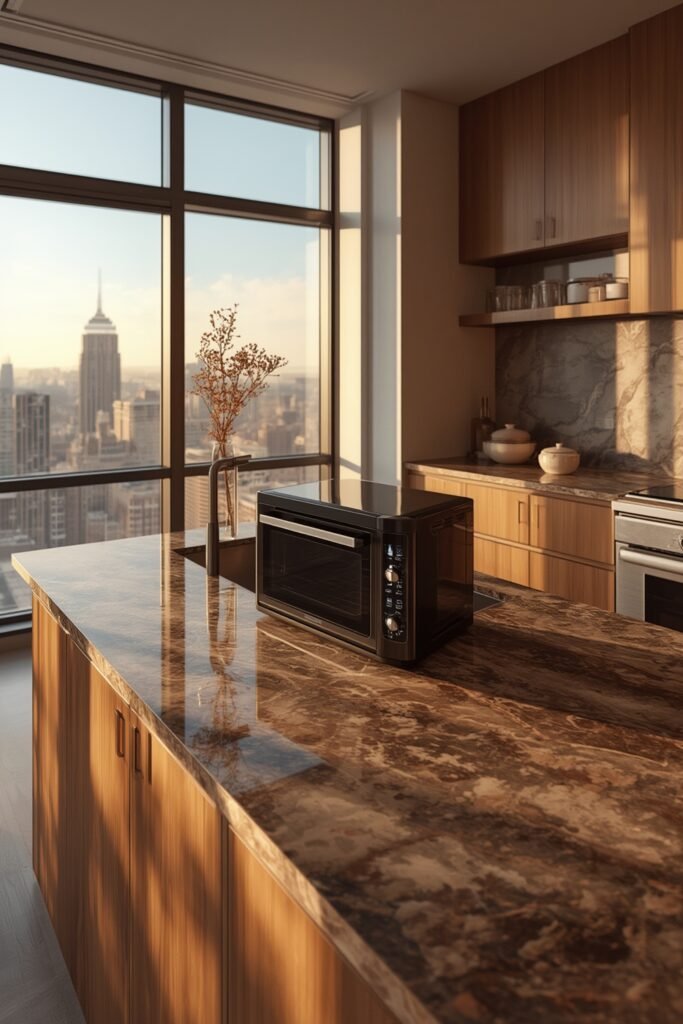

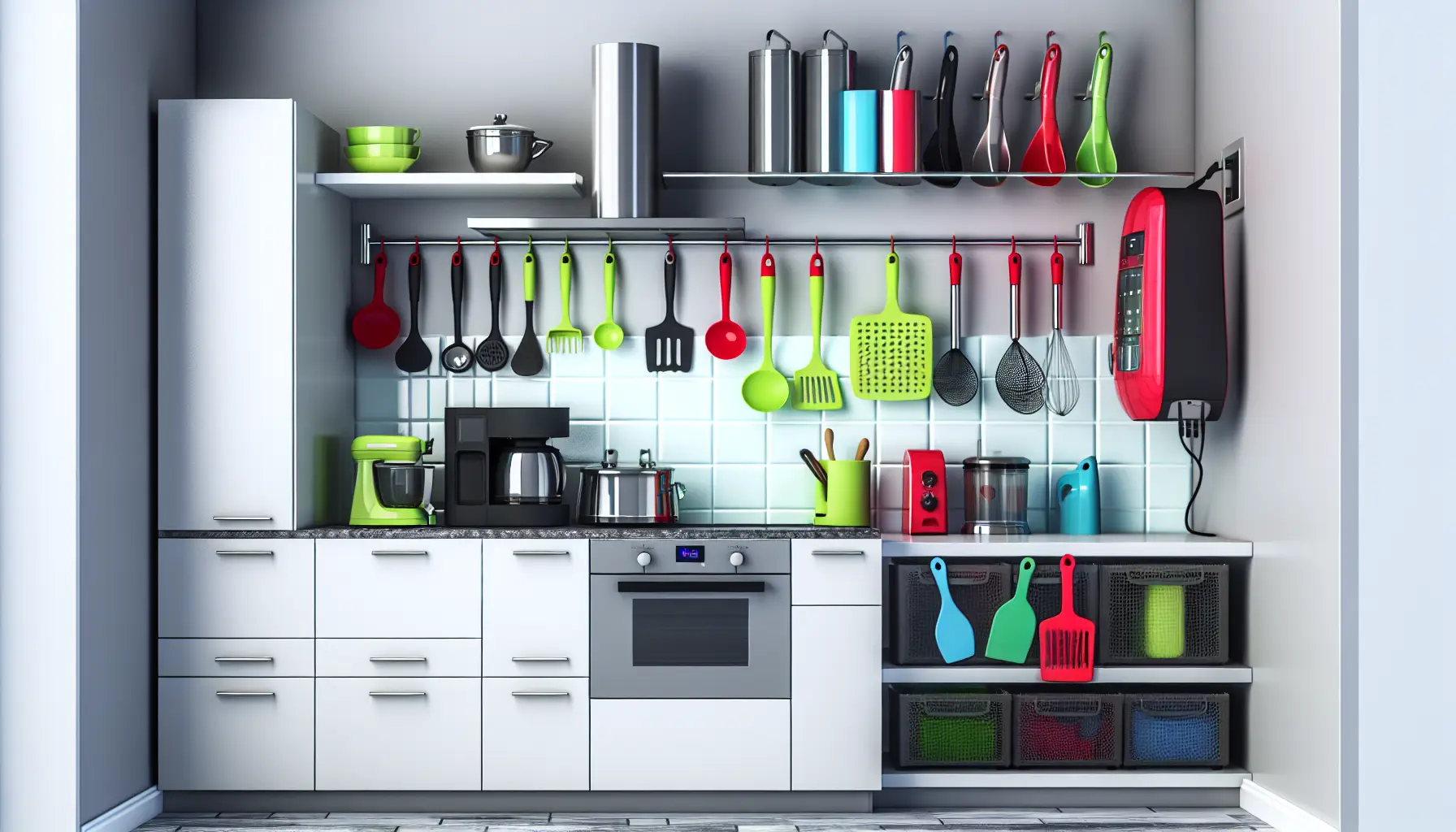
In small kitchens, every inch counts. This article explores essential kitchen gadgets tailored for limited spaces, enabling you to cook efficiently without sacrificing style. From multifunctional devices to smart storage solutions, discover how these innovative tools can transform your cooking experience in compact kitchen environments.Essential Kitchen Gadgets for Small Kitchens
Essential Kitchen Gadgets for Small Kitchens
Small kitchens impose a mix of physical and practical constraints that change how you plan, cook, and clean. Beyond the obvious lack of counter area, several less visible limitations shape daily use: restricted storage volume, awkward cabinet geometry, limited electrical capacity, minimal ventilation, and circulation that forces you to work in tight, shared zones. These constraints don’t just make things inconvenient — they change what is realistic to prepare and how long it takes.
The effects are concrete. With only a few feet of usable counter, staging multiple ingredients or appliances at once becomes impossible, so tasks must be sequenced rather than parallelized. Shallow or deep cabinets can hide items out of sight and out of reach, increasing retrieval time and discouraging use of some tools. Weak ventilation restricts high-heat cooking or frequent frying; few outlets mean you must juggle appliance use. Cluttered surfaces and overcrowded drawers raise safety risks and extend cleanup time, making quick weekday meals feel onerous.Essential Kitchen Gadgets for Small Kitchens

Practical assessment and priorities help translate these challenges into decisions about equipment. Measure usable countertop length, cabinet internal dimensions, vertical space above counters, number and location of outlets, and the clearance needed for doors and drawers. Note your cooking habits — do you mainly reheat, bake, or assemble fresh meals? That determines which features matter most: compactness, stackability, collapsibility, easy-clean surfaces, low power draw, or quiet operation.
Consider ergonomics and maintenance when you shop: comfortable grips, lightweight materials, and dishwasher-safe parts save time and strain. A clear organization plan — defined prep, cooking, and cleanup zones — minimizes back-and-forth and lets a few well-chosen items go farther. The next section examines how choosing tools that combine practicality and space-sensitivity can further streamline small-kitchen life.
Multifunctional Kitchen Gadgets
Multifunctional gadgets are the backbone of an efficient small kitchen: they compress several single-purpose tools into one compact unit, reducing clutter while streamlining cooking sequences. When evaluating options, prioritize devices that cover the tasks you perform most often and offer interchangeable attachments rather than permanent, single-use designs. A good food processor, for example, can handle chopping, shredding, slicing, pureeing and even dough-kneading with a handful of discs and blades — replacing bulky mandolines, graters and an extra mixer.Essential Kitchen Gadgets for Small Kitchens
Electric kettles with variable temperature control and a quick-boil function do more than make tea: they speed up blanching, rehydrating grains, and preheating water for sous-vide or pour-over coffee. Choose models with a narrow footprint, cordless bases and auto-shutoff for safety. Multicookers (pressure-cooker/slow-cooker/rice-cooker combos) are another space-saving staple — they consolidate different pots and ovens into a single programmable vessel, cutting down on cookware and reducing stove-time coordination.Essential Kitchen Gadgets for Small Kitchens
Look for combo appliances that are thoughtfully engineered: immersion blenders with whisk and mini-chopper attachments, stand mixers with pasta rollers and food-processor bowls, or toaster-oven/air-fryer hybrids. Key selection criteria include footprint vs capacity, ease of swapping attachments, noise level, energy draw, and how simple the unit is to clean. Dishwasher-safe parts and nested storage for accessories make a huge difference in daily usability.
Be mindful of trade-offs: multifunctional tools can sacrifice peak performance for versatility, and a single breakdown may disrupt multiple tasks. To mitigate that risk, keep a minimal, reliable backup (e.g., a manual whisk or chef’s knife). Thoughtful choice and maintenance of multifunctional gadgets will reduce the number of items kept in a small kitchen while improving workflow, consistency, and even the visual calm of your countertop.Essential Kitchen Gadgets for Small Kitchens
Space-Saving Storage Solutions
Maximizing usable space in a small kitchen requires storage solutions that are both clever and deliberate. Prioritize stackable containers with uniform footprints—choose a set of clear, airtight containers that nest when empty and stack securely when full. Glass is excellent for long-term storage and visual inventory, while BPA-free plastic is lighter and less fragile; look for removable lids that stack separately or interlock to avoid wasted vertical space. Use a label-and-date system to keep contents visible and rotate items by frequency of use.
Hanging racks and rails turn walls and undersides of cabinets into functional real estate. Install a shallow rail with S-hooks for mugs, utensils, and small pans; an under-cabinet hanging basket is perfect for sponges or produce that needs airflow. For pots and pans, consider a compact wall-mounted or ceiling-mounted pot rack if ceiling height allows—securely anchor into studs and keep heavier items low to maintain balance. Over-the-door and inside-cabinet hanging pockets are inexpensive ways to store lids, cutting boards, and wraps without sacrificing shelf space.
Magnetic knife strips reclaim countertop real estate while increasing accessibility. Mount a magnetic strip at a comfortable height away from the stove and out of reach of children; ensure knives are dry before hanging to prevent rust. Magnetic solutions also work for spice tins, metal measuring cups, and small metal tools—freeing drawer and counter space.Essential Kitchen Gadgets for Small Kitchens
Practical organization tips:
- Zone your storage by task (prep, cooking, baking) and keep daily-use items within arm’s reach.
- Store heavy items low, fragile or infrequent items higher.
- Use vertical dividers for baking sheets and lids; lazy Susans for corner cabinets.
- Measure before buying—fit matters; leave clearance for doors and appliance lids.
A short daily reset (5 minutes) maintains accessibility and makes these space-saving systems truly effective.
Smart Tech for the Compact Kitchen
Smart devices can shrink the mental and physical clutter of a compact kitchen by replacing multiple single-purpose tools with precision, automation, and connectivity. A **smart scale** does more than weigh ingredients: paired with recipe apps it scales servings, calculates nutrition, logs portions, and guides you through recipes step-by-step so you can measure directly into a bowl, pot, or pan and avoid keeping multiple measuring cups and charts on hand. Look for models with Bluetooth, tare memory, and food databases to speed prep and control waste.
**App-controlled appliances** — from multicookers and countertop ovens to induction burners and coffee machines — let you preheat, schedule, and monitor cooks remotely. That reduces the need to hover in the kitchen, frees countertop time, and enables batch-cooking strategies that suit limited work surfaces. Choose multi-function units (air-fry/roast/steam combos, cook/slow/sous vide multicookers) that compress several appliances into one compact footprint.
Digital thermometers and wireless probe systems are especially valuable in small kitchens. Oven-safe probes with Bluetooth/Wi‑Fi let you monitor internal temperatures and receive alerts without opening the oven or clearing counter space for an extra device. Multi-probe setups enable simultaneous monitoring of different parts of a meal, improving accuracy and timing so you avoid wasted retries.
Beyond space and convenience, smart tech adds safety (automatic shutoffs, overheating alerts), energy efficiency (scheduling for off-peak power), and maintenance prompts that prolong appliance life. Integration with voice assistants and automation platforms streamlines hands-free control and sequencing (e.g., start the slow-cooker when you leave work).
Be mindful of connectivity, privacy, and subscription models; prioritize devices with reliable offline modes, compact charging options, and proven app support. In a compact kitchen, well-chosen smart tools replace clutter with precision, time savings, and smarter workflows.
Choosing the Right Gadgets for Your Needs
Choosing the right gadgets for a small kitchen starts with a clear assessment of how you actually cook. Consider frequency (daily quick meals vs. weekend projects), cuisine types (stews and one-pot meals vs. delicate pastries), and whether you entertain often. Ask yourself: do you value speed, variety, low-maintenance cleanup, or space-saving storage most? These answers should guide every purchase.
Measure both storage and working areas before shopping—count drawers, shelf heights, counter depth, and available vertical real estate. Note where outlets are and whether you can stow heavier items on high shelves. Think in three dimensions: some appliances can live upright, hanging, or under-shelf. Visualize how often an item will be used; gadgets used weekly deserve counter space, whereas monthly tools belong in deep storage.Essential Kitchen Gadgets for Small Kitchens
Prioritize versatility. A high-quality chef’s knife, a sturdy sauté pan with lid, and a Dutch oven or multi-use pot cover broad cooking methods without crowding your cabinets. Choose collapsible or nesting versions of strainers, measuring cups, and mixing bowls to reclaim shelf space. Favor items that perform multiple functions: an immersion blender that purees and whips, a compact food processor with interchangeable discs, or a counter-top oven that toasts, bakes and broils. Avoid single-function gadgets that duplicate capabilities of tools you already own.
Evaluate ease of cleaning and durability—items that are dishwasher-safe or have few crevices reduce friction and increase use. Consider cord and plug management for countertop devices, and whether an item can be stored vertically or hung to free surfaces. Set a purchasing hierarchy: essentials for daily cooking first, then space-efficient multi-use appliances, and lastly specialty tools for niche hobbies. Use this quick checklist to decide:
– *Do I use it at least weekly?*
– *Can it replace another item?*
– *Will it fit in my measured storage?*
– *Is it easy to clean and store?*
Make choices that simplify routines and reduce clutter—small kitchens benefit most from smart selection, not more stuff.
Conclusions
Optimizing a small kitchen requires the right gadgets that blend functionality with space-saving design. By incorporating these essential kitchen tools, you can enhance your cooking experience and make the most of your limited space. Embrace creativity and innovation, and enjoy cooking in your cozy kitchen.