

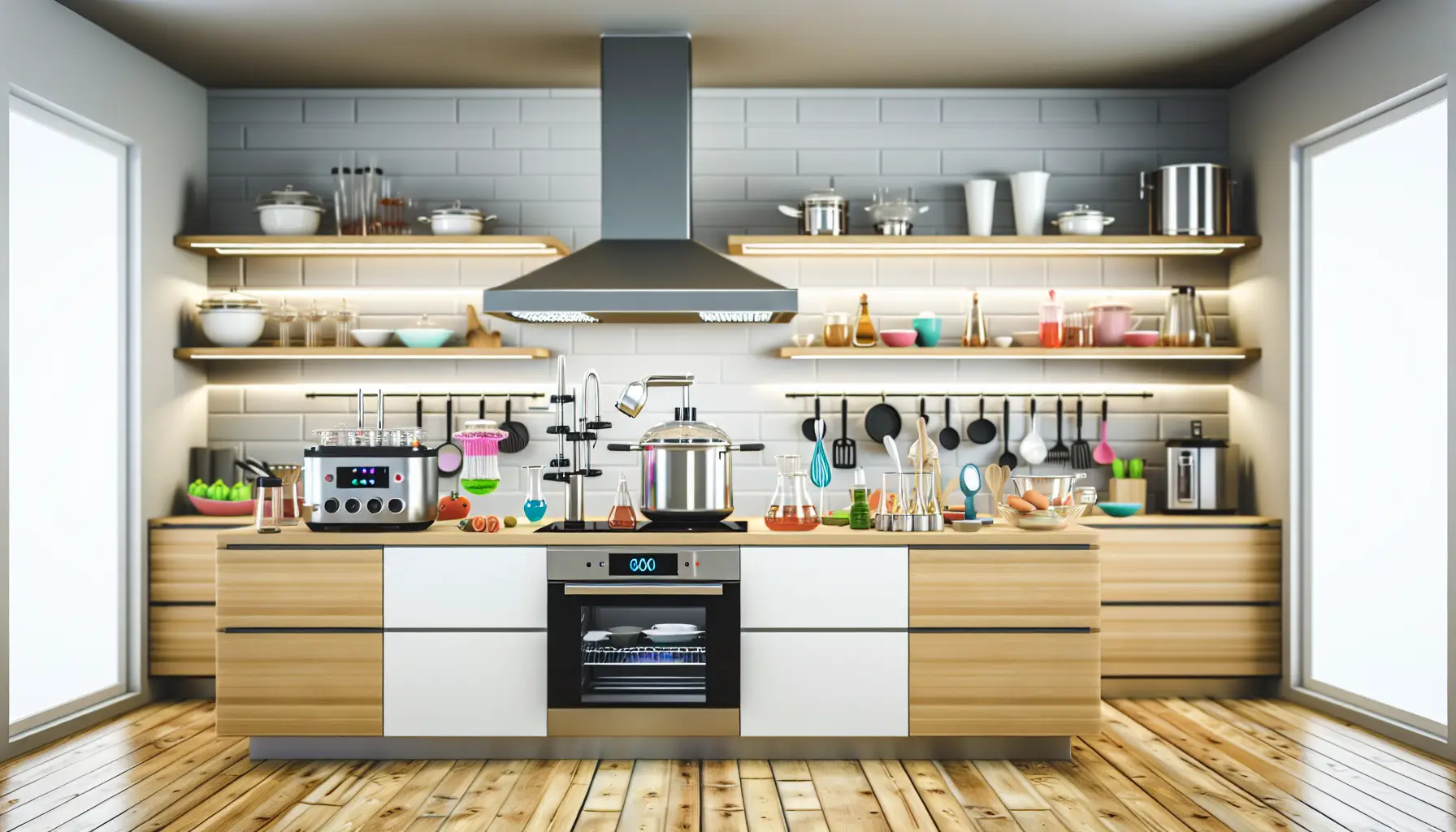
In today’s fast-paced world, innovative kitchen gadgets are transforming the way we cook. These tools not only streamline food preparation but also inspire culinary adventures. From molecular gastronomy devices to smart cooking assistants, this article delves into the latest must-have gadgets that elevate home cooking experiences, making it easier and more enjoyable for everyone.Innovative Kitchen Gadgets for Modern Home Cooking
Innovative Kitchen Gadgets for Modern Home Cooking
Over the past few decades kitchen tools have moved from simple mechanical aids to intelligent instruments that blend engineering, materials science and design. Advances in microcontrollers, sensors, battery and induction technology, new nonstick and ceramic materials, and cost-effective manufacturing have allowed devices once confined to professional kitchens to be reimagined for home cooks. Miniaturization and connectivity made possible by IoT have turned ovens, thermometers and even blenders into precision instruments that can be updated and calibrated rather than replaced.Innovative Kitchen Gadgets for Modern Home Cooking
The evolution has been driven as much by chefs and tinkerers as by traditional manufacturers. Innovators in restaurants tested radical approaches to texture, temperature and plating, creating a demand for tools that could reproduce repeatable results. Chef Homaro Cantu exemplified this intersection: his experiments with edible films, printed flavors and engineered textures pushed engineers to devise new delivery mechanisms and appliances. Innovative Kitchen Gadgets Revolutionizing Cooking at Home Rather than treating technology as novelty, he treated it as a language for flavor and experience, encouraging collaborations that seeded ideas for consumer gadgets.
Inventors translated those lessons into home-focused designs: immersion circulators that bring precise thermal control to a countertop, compact vacuum sealers that enable efficient marination and storage, app-controlled ovens that automate complex programs, and high-speed blenders that unlock emulsions and purees once only achievable with heavy equipment. The underlying shift is toward *precision, repeatability and user empowerment*—devices that reduce skill barriers while increasing creative possibilities.Innovative Kitchen Gadgets for Modern Home Cooking
The evolution has been driven as much by chefs and tinkerers as by traditional manufacturers. Innovators in restaurants tested radical approaches to texture, temperature and plating, creating a demand for tools that could reproduce repeatable results. Chef Homaro Cantu exemplified this intersection: his experiments with edible films, printed flavors and engineered textures pushed engineers to devise new delivery mechanisms and appliances. Rather than treating technology as novelty, he treated it as a language for flavor and experience, encouraging collaborations that seeded ideas for consumer gadgets.
These innovations respond to modern demands for speed, health, reduced waste and striking presentation. By delivering consistent results with smaller footprints and energy use, they let everyday cooks experiment confidently and efficiently. The aggregate effect is a new kitchen ecosystem where culinary ambition and engineering capability advance together, setting the stage for more specialized techniques to move into the home.Innovative Kitchen Gadgets for Modern Home Cooking
Molecular Gastronomy in Home Cooking
Molecular techniques have moved beyond haute cuisine into many home kitchens, enabling cooks to manipulate textures and concentrate flavors in ways previously possible only in restaurants. At the heart of home molecular cooking are a few accessible tools that translate chemistry into repeatable culinary results.Innovative Kitchen Gadgets Revolutionizing Cooking at Home
Spherification kits (sodium alginate, calcium chloride, measuring syringes) let you create delicate gel membranes around liquid cores. In direct spherification you drop a flavored liquid containing alginate into a calcium bath to form pearls; in reverse spherification you use calcium in the flavored liquid and an alginate bath for firmer skins—think balsamic “caviar” on burrata or olive oil spheres that burst on the tongue.
Sous-vide equipment—immersion circulators, vacuum sealers, and water baths—provide precise, low-temperature cooking that transforms tough connective tissues into tender, silky textures while locking in juice and flavor. Examples: 56°C salmon with herb oil served alongside citrus spheres, or 63°C egg yolk custards that act as rich sauce components.
Whipping siphons (espuma guns) use pressurized N2O to aerate creams, purées and broths into stable foams—beet espuma for a goat-cheese tartlet, or light porcini foam over risotto. The same tool can make charged infusions for rapid flavor extraction.
Smoking guns, kitchen torches and agar/gel agents round out techniques: cold-smoking concentrates aroma without heat, torches create instant Maillard caramelization, and agar or gelatin enable jellies, terrines and textural contrasts that hold at warmer temperatures than gelatin.

More niche devices like countertop centrifuges or rotary evaporators are emerging for dedicated enthusiasts seeking clarified consommés or concentrated aromatics, though cost remains high. The appeal is clear: precision and new textures open creative expression and sensory surprise. Home cooks should, however, respect ingredient chemistry, follow safe handling (e.g., correct calcium/alginate ratios), and start with simple recipes to master technique before pushing boundaries.
Smart Kitchen Devices Transforming Cooking Experience
Smart kitchen devices are shifting cooking from manual technique to an experience managed by sensors, connectivity, and automation. Voice-activated assistants and smart ovens are at the forefront: voice interfaces (via Amazon Alexa, Google Assistant, or built-in assistants) let cooks call up recipes, set timers, adjust temperatures, and trigger appliance routines without touching screens—particularly useful when hands are messy. Smart ovens combine multi-zone heating, internal cameras, probe-based doneness sensing, and app-driven guided programs to remove guesswork. They can recognize food types, suggest cook profiles, and automatically adjust time and temperature during a cycle.
These devices simplify complex processes in two key ways: first, by encapsulating expertise into automated profiles and guided recipes that non-experts can follow; second, by providing continuous feedback through sensors and remote monitoring so enthusiasts can intervene or iterate based on logged data. For example, a smart oven that streams an internal camera to your phone lets you check browning remotely, while probe sensors relay precise core temperatures to ensure consistent results.
Popular smart-kitchen offerings highlight this combination of automation and connectivity:
- Voice-enabled hubs (Echo Show, Google Nest Hub): hands-free recipe navigation, timers, and synchronized routines with other appliances.
- Smart ovens and countertop units (models with AI food recognition): guided presets, multi-stage cooking, and app notifications.
- Connected multi-cookers: remote-start, recipe libraries, and auto-program adjustments for different proteins or textures.
- Smart refrigeration/inventory systems: barcode or camera-based tracking, shopping list generation, and integration with grocery delivery.
Beyond convenience, consider trade-offs: ecosystem lock-in, firmware updates, and privacy concerns around cameras/microphones. For home cooks, the true value comes from appliances that translate technique into repeatable outcomes while still allowing manual control—enabling novices to learn faster and enthusiasts to refine and record their methods.Innovative Kitchen Gadgets for Modern Home Cooking
Essential Gadgets for Efficiency and Precision
After exploring connected, automated appliances, many home cooks find that accuracy still comes down to a handful of tactile, precision-focused gadgets that eliminate guesswork. At the center is the digital kitchen scale. Measuring by weight (grams/ounces) rather than volume removes variability in flour packing and humidity; the tare function lets you build recipes in a single bowl, and precise scaling makes baker’s-percentage adjustments and recipe conversions reliable. Regular calibration and using the scale for portion control also trim waste and ensure consistent plating.
Equally transformative is the food processor. With interchangeable blades and pulse control it performs chopping, shredding, emulsifying and even kneading faster and more uniformly than by hand. Mastering pulse intervals and feed-tube technique gives control over texture—coarse for rustic salsas, fine for silky nut butters—so you can reproduce results batch after batch.
Specialized measuring devices bridge the gap between speed and precision:
- Digital instant-read and probe thermometers — essential for meats, sugar work and custards; probe logs and alarms prevent overcooking.
- Adjustable measuring spoons and nested cups — calibrated tools reduce leveling errors common with improvised scooping.
- Portion scoops, scale-based batching tools and batter dispensers — create uniform portions quickly for baking and frying.
- Refractometers and pH meters — niche but invaluable for jams, fermentations and candy where sugar concentration and acidity determine set and safety.Innovative Kitchen Gadgets for Modern Home Cooking
Using these gadgets means designing workflows around verified measurements: pre-weigh ingredients, document temperatures used, and note pulse settings. The payoff is repeatable textures, predictable rise and Maillard reactions, and a dependable foundation that makes later creative departures safer and more successful.
Embracing Creativity with Unique Kitchen Tools
Unique, playful tools push cooking from routine into imaginative expression. An edible ink printer transforms visual ideas into bite-sized statements: print photos or custom messages on frosting sheets, wafer paper or rice paper to top cakes, cookies or cocktail garnishes. Choose printers and inks explicitly labeled food-safe, and either dedicate a single machine to edible printing or clean carefully between uses. Expect limits — colors can shift on wet surfaces and printed toppers soften in humidity — so print shortly before serving and use a light coating of clear piping gel to protect delicate designs.
Spiralizers open a new language of texture. Handheld models are portable; countertop spiralizers and interchangeable blades offer ribbons, spaghetti or julienne cuts at varying thicknesses. Beyond making zucchini “noodles,” experiment with firm root vegetables (beets, celeriac) for colorful salads, or spiralized potatoes for layered roasting. To avoid sogginess: salt lightly and drain, or briefly blanch and shock; finish in a hot pan or oven for crisp edges. Save scraps — ribbons can be baked into chips or used as aromatic stock flavoring.
Specialty mold sets — silicone, rigid polycarbonate and flexible thermoplastic — let you craft consistent, professional shapes for savory terrines, frozen mousses, plated desserts or bite-sized amuse-bouches. Use rigid molds for glossy chocolate shells, and soft silicone for setting gelatin, panna cotta and ice. Layering techniques (freeze between pours) create multi-textured bites; unmolding is easier when molds are chilled then gently flexed.
Practical integration tips:
- Start small: buy one tool and plan one recipe per week to build skills.
- Set a prep station: keep blades, sheets and molds accessible to reduce friction.
- Interactive entertaining: offer a decorate-your-dessert printer or spiralize-your-salad station for guests.
- Mind safety: use food-grade materials and follow manufacturer cleaning guidance.
With attention to technique and timing, these gadgets turn ordinary meals into playful experiments and memorable gatherings.
Conclusions
As we have explored, innovative kitchen gadgets are at the forefront of a cooking revolution. By embracing these inventive tools, home cooks can enhance their culinary skills, save time, and unleash their creativity in the kitchen. Investing in the right gadgets not only simplifies cooking but also makes it a more enjoyable and rewarding endeavor.Innovative Kitchen Gadgets for Modern Home Cooking
—
Innovative Kitchen Gadgets for Modern Home Cooking