

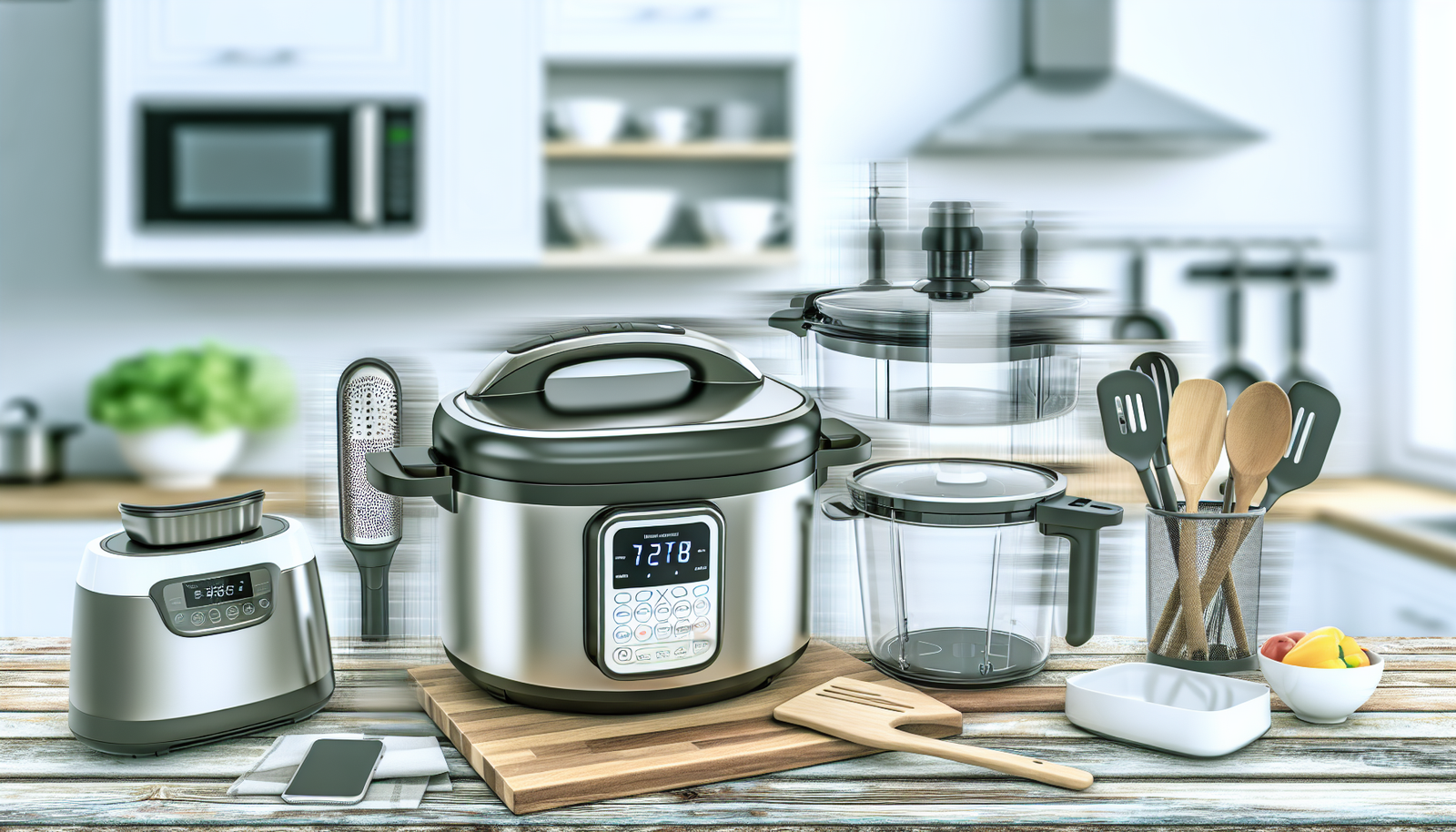
In today’s fast-paced world, busy individuals crave efficiency in their kitchens. Time-saving kitchen gadgets are essential tools that streamline food preparation, making cooking quick and enjoyable. This article explores a selection of innovative gadgets designed to help you save time without sacrificing meal quality.Time-Saving Kitchen Gadgets for Busy People
Time-Saving Kitchen Gadgets for Busy People
When every minute counts, a handful of well-chosen tools convert fiddly prep into a few concentrated actions. A **food processor** is the workhorse: with the right blade it dices onions without tears, shreds carrots for slaws in 20–30 seconds, slices potatoes uniformly for gratins, and even kneads dough in minutes. Practical tips: cut large pieces to fit the feed tube, use short pulses for control, and switch to the S‑blade for purees or the shredding disk for cheese and veg.
The **mandolin** delivers restaurant‑consistent slices and julienne at scale. Set the thickness, use the handguard or a cut‑resistant glove, and you’ll have uniform chips, gratin layers, or cucumber ribbons in a fraction of the time hand‑slicing would take—crucial for even cooking and professional texture. Pay attention to blade types (straight, corrugated, julienne) to match the task.

For liquid and blending tasks, an **immersion blender** eliminates transfers: blend soups directly in the pot, emulsify dressings, or whip up mayonnaise and smoothies in seconds. It reduces washing and keeps hot liquids contained. A small **mini‑chopper/processor** tackles herbs, nuts, garlic, and small amounts of vegetables faster and more uniformly than a knife.Ultimate Time-Saving Kitchen Gadgets for Busy People
Other essentials that shave minutes: a **stand mixer** with paddle or dough hook (knead dough and then use paddle to shred hot cooked chicken in 30–60 seconds), a **spiralizer** for instant veg noodles, a **salad spinner** that washes and dries greens so dressings stick immediately, and a **microplane** for fast zesting and grating. Even simple tools like a sharp Y‑peeler, a bench scraper to move and portion piles, and a reliable kitchen scale speed repetitive tasks and reduce mistakes.
Used together, these gadgets convert prep from a lengthy chore into a handful of swift, repeatable steps—setting you up to finish and plate quickly without sacrificing texture or flavor, and leaving programmable cooking and timing tricks for the next section.
Automated Cooking Solutions
Slow cookers, electric pressure-cookers (like the Instant Pot family), and smart ovens shine not because they chop or mix faster, but because they automate entire cooking processes so busy people can hand off meals and trust the device to finish them. Their value lies in programmable cycles, internal sensors, and multi-stage cooking logic that remove the need to babysit dishes.
Programmable features to look for:
- Delayed start and timers: schedule the cook to begin hours later so a stew starts after your commute, or porridge begins as you wake.
- Temperature probes and auto-shutoff: set a final internal temperature for roast or poultry; the device finishes, holds, and prevents overcooking.
- Multi-stage programs: browning/sauté, then pressure/slow-cook, then keep-warm automatically executed in sequence.
- Preset cooking profiles: select specific recipes (beans, rice, braise) and the unit adjusts time/pressure/heat without manual intervention.
Real-world examples that save time:
- Set a slow cooker at 6:30 a.m. for pulled pork to cook low for 10 hours, finishing on low-warm so it’s ready and safe when you get home.
- Use a pressure-cooker’s multi-stage program to brown aromatics, then rapidly pressure-cook a beef chili and switch to keep-warm until dinner.
- Program a smart oven with a probe to roast a chicken while automatically lowering heat for resting; the oven finishes and holds the meat at serving temperature without overbaking.
- Prepare overnight steel-cut oats with a delayed start so breakfast is hot when you wake, or set a yogurt program for consistent fermentation without monitoring.
Using these devices properly—pre-chilling ingredients if delaying start, following humidity and safety guidelines—lets you achieve complex, slow-cooked flavors with minimal hands-on time and predictable results every day.
Smart Kitchen Technology
Smart thermometers like the standalone probes or probe-and-app combos (for example, Meater or Weber iGrill) continuously track internal temperatures, estimate remaining cook time using real-time thermal models, and push alerts or voice notifications when target doneness is reached. That means you can start a task, leave for errands or work, and only intervene when the app signals a critical step — eliminating repeated temperature checks.
Wi‑Fi‑enabled pressure cookers and multi‑cookers extend this connectivity by offering remote control, firmware updates, and access to cloud recipe libraries. Unlike basic programmable devices, these models receive cooking programs from trusted recipe services, let you tweak parameters from your phone, and log successful settings for repeatability. They also integrate with voice assistants (Alexa/Google/HomeKit) so hands‑free commands start, pause or query progress while you prep other components.
Recipe and meal‑management apps are the glue. Apps such as Whisk, Yummly or smart grocery tools automatically scale ingredient lists for your household, generate prioritized shopping lists, and time‑optimize steps across dishes so you can batch prep efficiently. Features to look for:

- Stepwise timers and cook‑along modes that advance instructions automatically when a sensor hits a target;
- Cross‑device coordination syncing oven, sous‑vide and countertop devices so finishing times align;
- Inventory and shopping integration linking pantry lists to delivery or grocery apps.
The net benefits for busy individuals are concrete: less active monitoring, fewer ruined runs-to-the-kitchen, easily repeatable results, and a tighter feedback loop that reduces wasted time and food. For reliable performance, prioritize secure, well‑supported ecosystems and appliances that expose clear app controls and sensor telemetry.
Gadgets that Reduce Cleanup Time
Cooking for speed often stalls at the sink — so prioritize tools that shift time from scrubbing to savoring. Silicone baking mats and liners are heavyweight allies: they replace parchment and foil, provide a naturally nonstick surface for roasting and baking, and rinse clean quickly. Choose food-grade silicone with a textured surface to reduce food adhesion; avoid metal utensils that nick the surface. Reusable silicone muffin cups and baking molds eliminate paper liners and slide foods out without greasing, cutting both prep and wash-up.
Dishwasher-safe design is a deceptively simple time-saver. Look for utensils and gadgets explicitly rated dishwasher-safe — silicone spatulas, nylon turners, stainless steel measuring cups, and many mandoline components — so you can load and go. Beware wooden handles and certain nonstick coatings that degrade in the dishwasher; when in doubt, handwash those to extend life. For small parts (lids, valves, blades), use the top rack and a mesh dishwasher bag to prevent loss.
One-pan and one-bowl cooking devices change the game by collapsing multiple cooking and transfer steps. A heavy, well-seasoned skillet or a high-quality nonstick sauté pan with a fitted lid lets you sear, braise, and finish a meal in the same vessel; sheet-pan dinners use a single rimmed sheet with a silicone liner for complete meals with minimal tools. Enameled cast-iron cocottes can go from stovetop to oven and often require only a soft wipe when foods are well deglazed.
Complement these items with collapsible colanders, silicone steam baskets, and stackable measuring sets to reduce items in the sink and maximize cabinet space. Proper care — avoiding abrasive cleaners, drying thoroughly, and storing flat — preserves performance so busy cooks can focus on flavor, not foamy sinks.
Tips for Choosing the Right Kitchen Gadgets
When weighing a purchase, prioritize *utility over novelty*. A gadget that performs multiple, meaningful tasks will save more time than a single-use novelty. Look for features like adjustable speeds, interchangeable attachments, and settings that let the device handle different ingredients or portions — for example, a blender that also chops, heats, or emulsifies, or a countertop appliance with removable inserts to switch between roasting and steaming.
Space is a critical filter for busy households. Evaluate the gadget’s real footprint (not just box size). Favor foldable, stackable, or vertically storing designs and models with integrated storage for accessories. Consider corded versus cordless: cordless gives flexibility but often sacrifices run time. Think about where it will live permanently — under-cabinet mounts, slim profiles that fit by the stove, or models designed to tuck into pantry spaces reduce friction between wanting to use a tool and actually retrieving it.
User-friendliness determines whether a time-saver actually saves time. Test or watch demos to judge control logic, clarity of settings, and how many steps are needed to operate. Beware of products that promise power but have a steep learning curve; a good balance is intuitive controls with a few advanced options. Check for clear manuals, on-brand recipe support, and reliable customer service.
When evaluating reviews, read beyond star ratings: look for verified purchases, recurring failure modes, long-term feedback (6–12 months), and video reviews showing the gadget in real kitchens. Compare manufacturer specs with reviewer-measured performance. Factor in warranty, availability of replacement parts, and accessory compatibility.
Match purchases to your cooking patterns: if you batch-cook, prioritize capacity and timers; if you cook single portions, focus on small-batch efficiency. Finally, do a quick cost-per-use estimate: divide price by expected weekly use across years to see true value. Use this checklist before buying.
- Versatility: Multiple functions and attachments
- Space: Real footprint, storage options
- User-friendliness: Controls, learning curve, support
- Durability: Materials, parts, warranty
- Reviews: Verified, long-term, video demos
- Fit: Align with your cooking style and frequency
Conclusions
Incorporating time-saving kitchen gadgets into your culinary routine can transform the way you prepare meals. By leveraging technology and innovative designs, busy individuals can enjoy cooking without feeling overwhelmed. Embrace these tools to streamline your kitchen tasks and reclaim precious time for yourself and your loved ones.